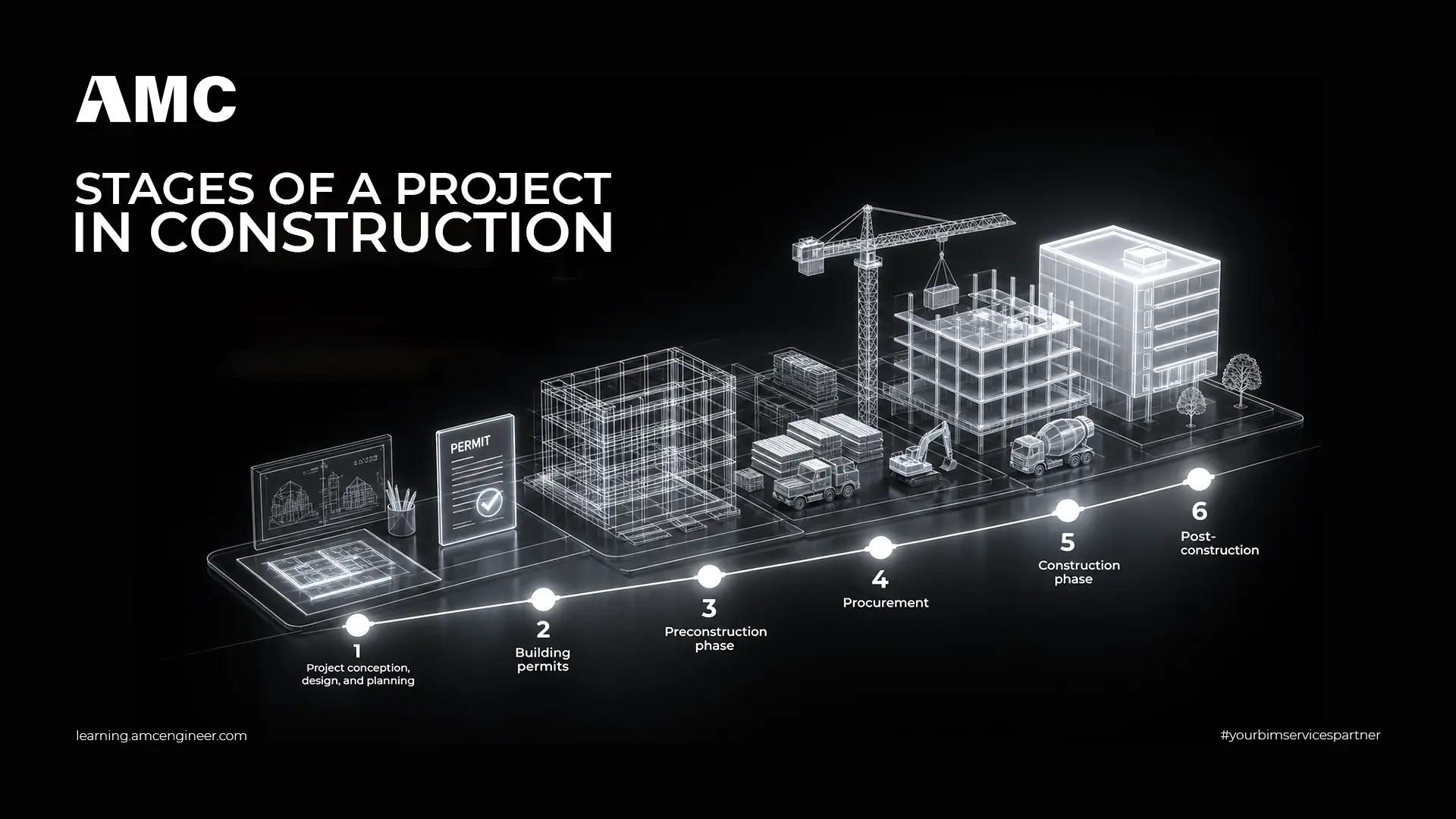
Stages of a Project in Construction describe the structured sequence of activities required to transform a concept into a completed building. Understanding these stages enables effective planning, coordination, and control of time, cost, quality, and risk throughout the project lifecycle.
What is a construction process?
A construction process is the sequence of steps required to move a project from concept to completion. It gives every stakeholder a clear roadmap for planning, approvals, coordination, execution, and closeout.
- It starts with an idea and project goals.
- It moves into design, approvals, and preconstruction planning.
- It continues through procurement and on-site construction.
- It ends with handover, closeout, and post-construction review.
Why are stages of a project in construction important?
Construction stages are important because they bring order to a complex project. A clear structure helps teams control cost, time, quality, communication, and risk more effectively.
- They improve scheduling and coordination.
- They reduce delays and costly mistakes.
- They help teams assign responsibilities clearly.
- They support better budgeting and resource planning.
- They make the project easier to manage from start to finish.
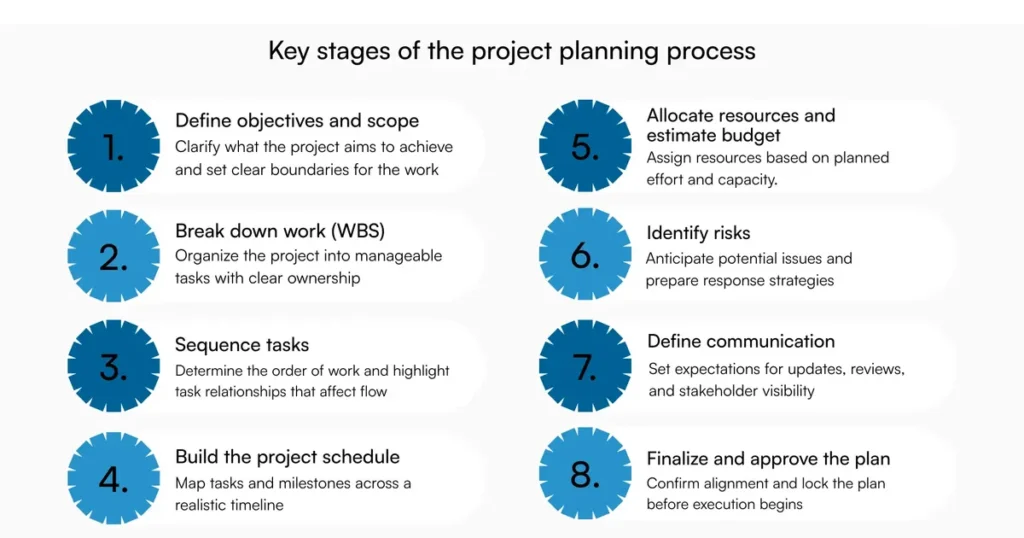
Key Aspects of Construction Project Planning
Good construction planning creates the foundation for successful execution. Strong content structure also helps readers and search engines understand the main topic and subtopics more easily.
- Defining project scope clearly.
- Estimating budget and timeline.
- Allocating labor, materials, and equipment.
- Identifying risks early.
- Creating communication and reporting systems.
- Setting milestones and responsibilities.
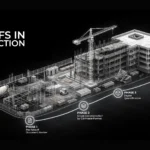
6 Stages of a Project in Construction
1. Project conception, design, and planning
This is the stage where the project begins to take shape. The owner and design team define the project vision, goals, feasibility, scope, and early design requirements.
- Identify project objectives.
- Study site conditions and constraints.
- Prepare concept designs and initial drawings.
- Establish budget expectations.
- Outline the timeline and delivery approach.
2. Building permits
Before construction begins, the required permits and approvals must be secured. This stage ensures the project complies with local regulations, zoning rules, and safety standards.
- Apply for building permits.
- Confirm zoning compliance.
- Obtain municipality or authority approvals.
- Review fire and safety requirements.
- Resolve legal or regulatory issues before site work starts.
3. Preconstruction phase
The preconstruction phase prepares the project team for execution. It focuses on detailed planning, coordination, cost control, scheduling, and risk reduction before physical work starts.
- Finalize scope and technical requirements.
- Develop detailed schedules.
- Prepare cost estimates and budgets.
- Coordinate among stakeholders.
- Plan safety procedures and site logistics.
- Define roles and communication workflows.
4. Procurement
Procurement is the process of obtaining the resources needed to deliver the project. This includes selecting suppliers, subcontractors, materials, and equipment on time and within budget.
- Request quotations and bids.
- Evaluate suppliers and subcontractors.
- Purchase materials and equipment.
- Manage lead times for long-delivery items.
- Finalize contracts and supply agreements.
5. Construction phase
This is the execution stage where the physical building work takes place. The project team manages labor, quality, safety, progress, and daily coordination on site.
- Mobilize labor and equipment.
- Begin site work and construction activities.
- Monitor quality and safety performance.
- Track schedule and budget progress.
- Manage site coordination across trades.
- Resolve design changes and field issues.
6. Post-construction
Post-construction happens after the main work is completed. This stage focuses on inspection, testing, final corrections, documentation, and handover to the owner.
- Prepare punch lists.
- Complete testing and commissioning.
- Submit as-built drawings and manuals.
- Finalize payments and closeout documents.
- Hand over the project to the client.
- Review lessons learned for future projects.
How to Organize the Stages of a Project in Construction
A well-organized construction process depends on clear structure, short readable sections, and easy-to-scan formatting. Meaningful headings and bullet points help readers quickly understand key information while supporting good blog structure for SEO.
- Set clear goals for each phase.
- Break the project into manageable stages.
- Assign responsibilities to each team member.
- Track deadlines, costs, and approvals.
- Use regular meetings and reports for follow-up.
- Keep documents and communication organized.
Building Framework for Project Planning
A project planning framework gives structure to the entire construction lifecycle. It helps teams align scope, schedule, resources, risk management, and communication before the work begins.
- Define project scope and objectives.
- Create a realistic budget.
- Build a practical schedule.
- Plan procurement early.
- Set reporting and communication methods.
- Monitor progress with regular reviews.
- Adjust the plan when conditions change.
Why master stages of a project in construction?
- Sequential phases optimize cash flow, resource allocation, and stakeholder alignment throughout the project lifecycle. BIM workflows reduce RFIs by 30%, minimize rework by 25%, and improve schedule predictability through 4D simulation and real-time coordination.
- For firms like AMC Engineer, phase expertise delivers precise modeling, clash-free building details drawings, and on-time handovers that elevate AEC project outcomes.
💡 Pro Tip: Effective BIM management across all construction project stages ensures seamless coordination, reduces errors, and maintains data integrity from design through facility operations. Learn how to implement robust BIM management workflows for your projects. {Contact US}
FAQ About Stages of a project in construction
1. How does BIM improve coordination across stages of a project in construction?
BIM creates a centralized 3D model that connects all project phases—from design through handover. Autodesk Revit and Navisworks enable real-time clash detection, reducing RFIs by 30% and ensuring architectural, structural, and MEP disciplines stay aligned throughout preconstruction, execution, and commissioning.
2. At which construction stage should building detail drawings be finalized?
Building details drawings are developed during pre-construction (design documentation stage) and refined through procurement for fabrication shop drawings. They’re verified during execution and updated as as-builts at handover, ensuring installation accuracy matches design intent.
3. What is Level of Development (LOD), and why does it matter in stages of a project in construction?
LOD defines how much detail BIM elements contain at each stage: LOD 100 (concept), LOD 200 (schematic), LOD 300 (construction docs), LOD 400 (fabrication), LOD 500 (as-built). This standardizes deliverables, prevents over-modeling early, and ensures accurate information when contractors need it.
4. How does Autodesk Construction Cloud support the in stages of a project in construction?
ACC centralizes RFIs, submittals, change orders, and document management in real-time for field teams. It tracks progress against 4D schedules, manages punch lists, and enables mobile access to updated drawings—keeping projects on schedule and reducing delays by 20%.
5. Why is BIM handover critical in the closeout and operations stage?
BIM handover delivers coordinated as-built models with equipment data, O&M manuals, and warranty info to facility management teams. This enables digital twin integration, predictive maintenance, and accurate space/asset tracking—cutting operational costs by 10-15% over the building lifecycle.