Raw land doesn’t become a living environment by chance—behind every successful green space lies a meticulous engineering process known as construction landscape .
What Is Landscaping?
Landscaping refers to the process of modifying outdoor spaces to improve appearance, functionality, and environmental performance through a combination of natural and structural elements.
Modern landscaping encompasses:
- Plant installation and lawn development
- Irrigation and drainage systems
- Outdoor lighting and walkways
- Retaining walls and water features
- Erosion control and stormwater management
- Ecological balance and biodiversity planning
Today’s landscaping goes well beyond aesthetics — it’s a technical discipline that directly affects stormwater runoff, urban heat, soil stability, and long-term property value.
Landscaping vs. Construction: What’s the Key Difference?
| Landscaping | Construction | |
| Primary Focus | Outdoor aesthetics and functionality | Structural building development |
| Key Elements | Plants, lawns, irrigation, outdoor features | Buildings, foundations, roads, infrastructure |
| Core Purpose | Enhances environmental and visual appeal | Creates core physical structures |
| Project Timing | Often follows primary construction | Usually begins the overall project |
Construction establishes the structural framework. Landscaping improves usability, sustainability, and visual character.
In modern developments, the two disciplines are increasingly integrated from early planning stages — because retrofitting landscape design after construction is both expensive and limiting.
When Does Landscaping Become Construction?
Landscaping crosses into construction territory when it involves structural, engineered, or large-scale development work requiring permits, technical planning, and regulatory compliance.
Examples include:
- Retaining wall installation
- Grading and excavation
- Drainage system construction
- Hardscape structural features
- Site preparation for development
- Public infrastructure landscaping
In these cases, landscape construction demands the same engineering rigor as any structural building project — and cutting corners carries the same consequences.
The Modern Shift in Construction Landscape
The construction landscape is being reshaped by three converging forces: technological innovation, sustainability requirements, and accelerating urban expansion.
Key drivers transforming the industry:
- Smart construction technologies — sensors, automation, and data-driven site management
- Green infrastructure mandates — rain gardens, bioswales, and permeable paving becoming standard
- Climate-resilient design — landscapes engineered to manage heat, flooding, and drought
- BIM and digital modeling — 3D visualization replacing traditional 2D planning
- Eco-friendly materials — recycled aggregates, sustainable paving systems, low-impact structures
Landscape construction is no longer a decorative afterthought. It’s a strategic component of environmental performance, urban planning, and long-term infrastructure investment.
Types of construction landscape Projects
Commercial construction landscape
Large-scale outdoor environments for office buildings, retail centers, hotels, industrial parks, healthcare facilities, and educational campuses.
Common scope includes parking lot landscaping, irrigation systems, outdoor seating areas, hardscape installations, green infrastructure, and pedestrian pathway networks. These projects require close coordination between engineers, architects, contractors, and environmental specialists.
Business impact: Commercially landscaped properties consistently attract more visitors, tenants, and investors — with studies showing professional landscaping can increase commercial property values by 10–15%.
Residential construction landscape
Functional and attractive outdoor living spaces designed for homeowners — patios, garden installations, outdoor kitchens, swimming pool landscaping, retaining walls, driveways, and smart irrigation systems.
Modern residential landscaping increasingly prioritizes water conservation, native plant integration, and smart outdoor technologies that reduce long-term maintenance costs.
Public Space & Infrastructure Construction Landscape
Urban parks, streetscape improvements, greenways, public plazas, transportation corridors, and environmental restoration projects.
These developments enhance public safety, environmental quality, and urban livability — and represent a growing share of municipal capital investment as cities prioritize green urban planning.
Environmental Restoration Projects
Ecosystem recovery, erosion control, and habitat restoration projects that address degraded land and waterways. These require specialized ecological knowledge alongside conventional construction expertise.
Key Components of Construction Landscape
Hardscaping: Structural Elements
The non-living structural backbone of any landscape — retaining walls, patios, walkways, stonework, concrete features, pergolas, and outdoor kitchens.
Hardscape design requires expertise in:
- Load distribution and structural integrity
- Material durability under climate stress
- Drainage engineering to prevent failure
- Soil stability and foundation design
Material selection determines both longevity and maintenance cost. Getting it wrong means expensive remediation.
Softscaping: Ecological Systems
The living elements — trees, shrubs, grass, ground cover, and soil systems — that give landscapes their environmental performance and visual character.
Successful softscape design requires understanding:
- Climate compatibility and seasonal performance
- Soil composition and amendment needs
- Water requirements and irrigation efficiency
- Biodiversity and ecological sustainability
Irrigation Engineering
Modern irrigation systems use sensors and weather data to optimize water delivery — reducing consumption while improving plant health. Water-efficient irrigation is increasingly required by environmental regulations in arid and semi-arid regions.
Drainage Infrastructure
Stormwater management controls runoff, prevents flooding, protects foundations, and reduces erosion. Poor drainage design is one of the most common and costly failures in landscape construction.
Grading & Soil Stabilization
Site grading ensures proper drainage and land stability before any hardscape or softscape installation begins. Soil stabilization prevents erosion and long-term structural failure.
Lighting Systems
Outdoor lighting improves safety, extends usability into evening hours, and significantly enhances the visual impact of landscape investments.
Construction Landscape vs. Landscape Maintenance
| Construction Landscape | Landscape Maintenance | |
| Nature of Work | Building and installation | Upkeep and preservation |
| Skills Required | Engineering and design | Ongoing horticultural care |
| Typical Activities | Excavation, grading, structural installation | Mowing, pruning, irrigation management |
| Project Type | Project-based | Recurring service |
| Permits Required | Often yes | Rarely |
Landscape construction creates outdoor infrastructure. Maintenance preserves it. Both are essential — but they require entirely different expertise and workflows.
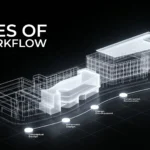
The Construction Landscape Process
| Phase | Activities |
| Site Analysis | Soil testing, drainage evaluation, topography assessment, environmental review |
| Design Development | Landscape plans, specifications, material selection, regulatory review |
| Budgeting & Planning | Cost estimation, material procurement, labor scheduling |
| Site Preparation | Excavation, grading, utility installation |
| Hardscape Installation | Structural outdoor elements — walls, paths, paving |
| Softscape Installation | Planting, soil preparation, ecological integration |
| Irrigation & Lighting | System installation and commissioning |
| Final Inspection | Quality control, performance testing, maintenance planning |
Skipping or compressing any phase increases risk at every subsequent stage.
Innovations Transforming Landscape Construction
| Innovation | Impact |
| Smart Irrigation Systems | Sensor-driven water management reduces consumption by up to 50% |
| BIM & 3D Modeling | Digital planning reduces design errors and client surprises |
| Green Infrastructure | Rain gardens and bioswales manage stormwater at source |
| Permeable Paving | Reduces runoff and recharges groundwater naturally |
| Drones & Site Scanning | Faster, more accurate surveying and progress monitoring |
| AI & Automation | Data-driven planning and predictive maintenance optimization |
These aren’t future technologies — they’re active differentiators for landscape construction firms delivering projects today.
Sustainability in Construction Landscape
Sustainable landscape construction has shifted from voluntary best practice to regulatory expectation in most major markets.
Core sustainable practices include:
- Water-efficient irrigation — sensor-based systems and drought-tolerant planting
- Native plant selection — reduces maintenance, water use, and chemical inputs
- Permeable paving — manages stormwater on-site rather than overwhelming drainage systems
- Renewable and recycled materials — reduced embodied carbon across hardscape installations
- Urban biodiversity enhancement — habitat corridors integrated into commercial and public developments
Sustainable landscapes reduce environmental impact and deliver measurable long-term operational savings — making them a sound investment, not just a compliance requirement.
How AMC Engineering Delivers Landscape Construction Excellence
At AMC Engineering, we approach construction landscape with the same precision and technical rigor we apply to structural and MEP engineering — because the outdoor environment is as critical to a project’s success as what happens inside the building.
Our construction landscape capabilities include:
- Site analysis and grading design — drainage, soil stability, and topographic planning
- Hardscape engineering — retaining walls, paving systems, and structural outdoor features designed for long-term performance
- Irrigation system design — water-efficient systems optimized for regional climate conditions in KSA, UAE, and Canada
- BIM-integrated landscape modeling — 3D visualization and clash coordination with architectural and structural teams
- Sustainable landscape planning — native plant integration, permeable systems, and green infrastructure that meets environmental compliance requirements
- Quantity takeoff and cost estimation — accurate material and labor estimates before groundbreaking
Whether you’re developing a commercial campus, a residential community, or a public infrastructure project, AMC Engineering delivers landscape construction solutions engineered to perform — not just to look good on opening day.
Conclusion
Modern construction requires more than attractive outdoor areas—it needs engineered landscapes that manage water, resist climate stress, support biodiversity, meet evolving regulations, and deliver measurable long-term property value. Landscape construction is now a core engineering discipline, best addressed early in planning to reduce drainage failures, cut maintenance costs, strengthen property values, and create spaces that serve people. As urban growth and sustainability demands rise globally, technically rigorous landscape construction will define standout, durable developments.
Ready to integrate professional construction landscape into your next development? Contact AMC Engineering to discuss your project requirements.
FAQ About construction landscape
Q1: Best construction landscape companies in Saudi Arabia?
Leading landscape construction companies in Saudi Arabia include Saudi Landscape Co. (established 2010, specializing in design, build, and O&M for government and commercial projects), SKILYA (Al-Khobar based, delivering residential, commercial, and industrial landscaping with eco-friendly practices and native plants), ALTHEEB Landscaping (Riyadh, known for irrigation-integrated landscape design), BEC Arabia / Green Dimensions Arabia (experts in golf course construction and xeriscaping for arid environments), and Decoraftab (Riyadh, full-service hardscape and softscape provider).
Q2: What are the leading companies for large-scale landscape construction services in Saudi Arabia?
For large-scale projects tied to Vision 2030, Ajlan & Bros Holding has been involved in landmark landscaping works including King Salman Park — one of the most ambitious urban landscape projects in Riyadh. Other major players include Saudi Landscape Co., Externa Arabia (urban development and sustainability-focused landscaping), and international firms contracted under giga-projects like NEOM and the Red Sea Project. Saudi Landscape Co. specifically focuses on government and commercial landscape design, construction, and operations across the Kingdom.
Q3: Where can I find suppliers for premium outdoor paving materials in Riyadh?
Top sources in Riyadh include: METARA Engineered Stones — a Saudi manufacturer of high-quality concrete pavers and slabs using German METTEN technology, suitable for both pedestrian and vehicular areas. Saudi Floors Company offers comprehensive flooring and landscape paving solutions for government and private projects, while Nujoum Builders specializes in interlocking paver installation across Riyadh. For bulk asphalt paving, Black Cat GC serves commercial and infrastructure projects.
Q4: How to choose the right construction landscape services for commercial projects?
Evaluate contractors on these criteria: valid MOMRA (Municipality) licensing, a portfolio of similarly-scaled commercial projects, in-house design and engineering teams, use of drought-tolerant and climate-appropriate plants, integrated irrigation planning, and a clear post-completion maintenance contract. Always request a BOQ with itemized costs and verify experience with Saudi Building Code compliance.
Q5: Compare different types of irrigation systems suitable for arid region landscape projects?
Drip irrigation dominates Saudi Arabia’s landscape market due to its ability to deliver water directly to plant roots with minimal evaporation — particularly well-suited for sandy soils and extreme heat. Drip systems can reduce water usage by up to 50% compared to conventional methods. Micro-sprinkler systems work well for larger planted areas like parks and lawns where even distribution is needed. Smart irrigation controllers automatically adjust schedules based on weather data and soil moisture. Subsurface drip systems are increasingly used in Riyadh as older surface systems are phased out in favor of pressure-compensated and sensor-based alternatives. For most commercial landscape projects in Saudi Arabia, a combination of drip + smart controllers is the recommended standard.
Q6: What is landscape construction?
Landscape construction is the physical implementation of outdoor environment designs — including grading and earthworks, planting of trees and vegetation, installation of irrigation systems, paving of pathways and hardscapes, and construction of water features, retaining walls, and outdoor structures. It turns a landscape architect’s plan into a built, functional outdoor space.
Q7: What is commercial landscape construction?
Commercial landscape construction applies landscape building techniques to business, institutional, and public-sector properties — such as corporate campuses, hotels, malls, parks, airports, and government buildings. It typically involves larger scale, tighter timelines, stricter compliance requirements, and long-term maintenance planning compared to residential projects.
Q8: What are the main types of landscapes?
The five main landscape types are: Natural landscapes (forests, deserts, mountains — unmodified by humans), Agricultural landscapes (farmland, orchards, irrigated fields), Urban/Built landscapes (parks, streetscapes, public plazas within cities), Residential landscapes (private gardens and home outdoor spaces), and Commercial/Institutional landscapes (corporate grounds, hospitality venues, public facilities). In Saudi Arabia, arid/desert landscaping and urban green spaces are the most actively developed categories.
Q9: How many types of landscaping are there?
Broadly, there are 6 recognized types of landscaping: Softscaping (plants, trees, lawns), Hardscaping (paving, walls, structures), Xeriscaping (drought-resistant design — highly relevant for Saudi Arabia), Sustainable/Ecological landscaping (native plants, water conservation), Formal landscaping (geometric, structured gardens), and Naturalistic landscaping (mimicking natural environments). Most professional commercial projects in Saudi Arabia combine softscaping, hardscaping, and xeriscaping to balance beauty with water efficiency.