
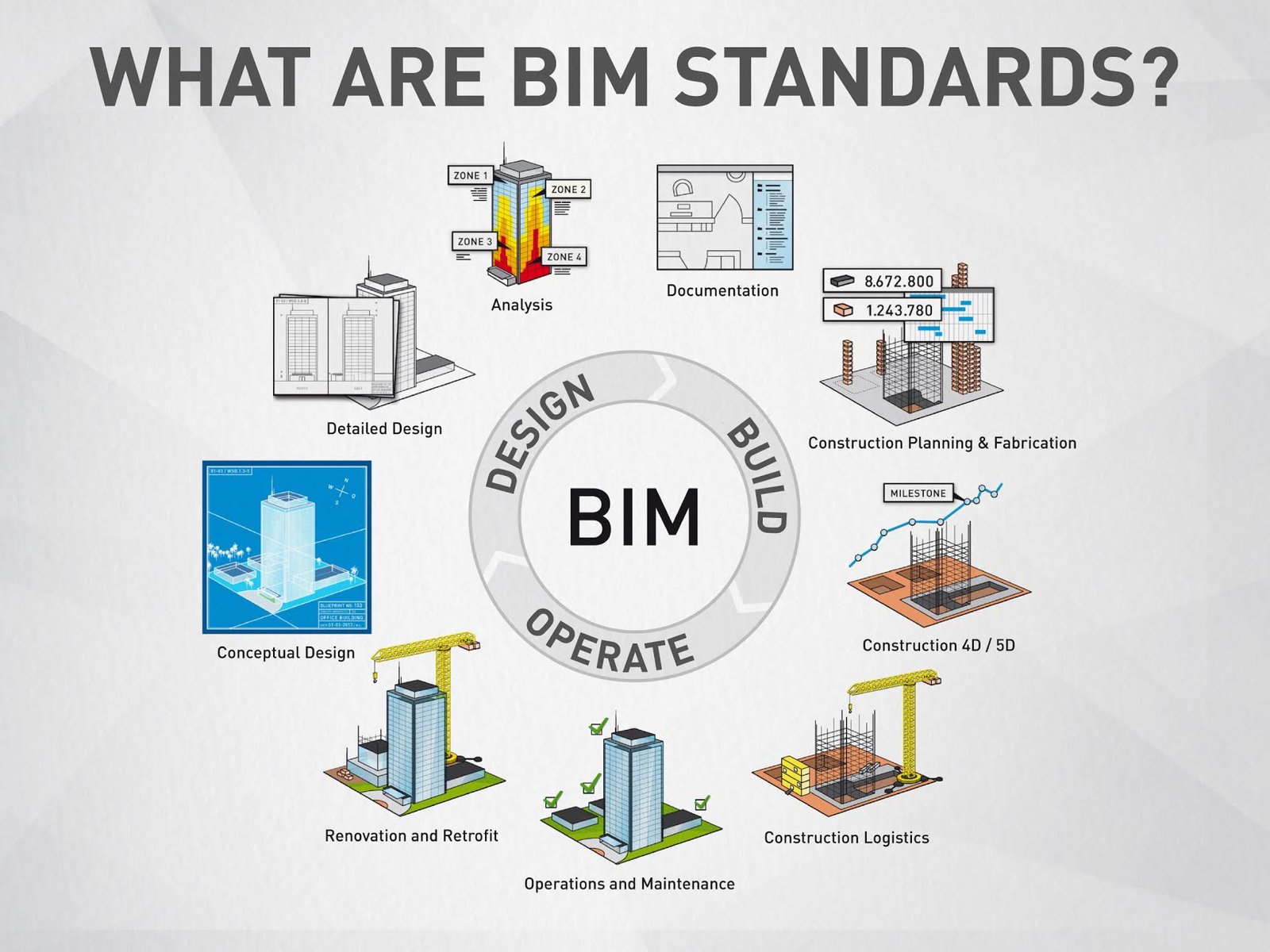
BIM standards transform complex construction projects into streamlined, data-driven successes by ensuring precision and seamless collaboration at every phase. By adopting these rigorous protocols, teams move beyond mere drafting to create intelligent digital assets that significantly enhance efficiency and long-term project value.
What are BIM standards?
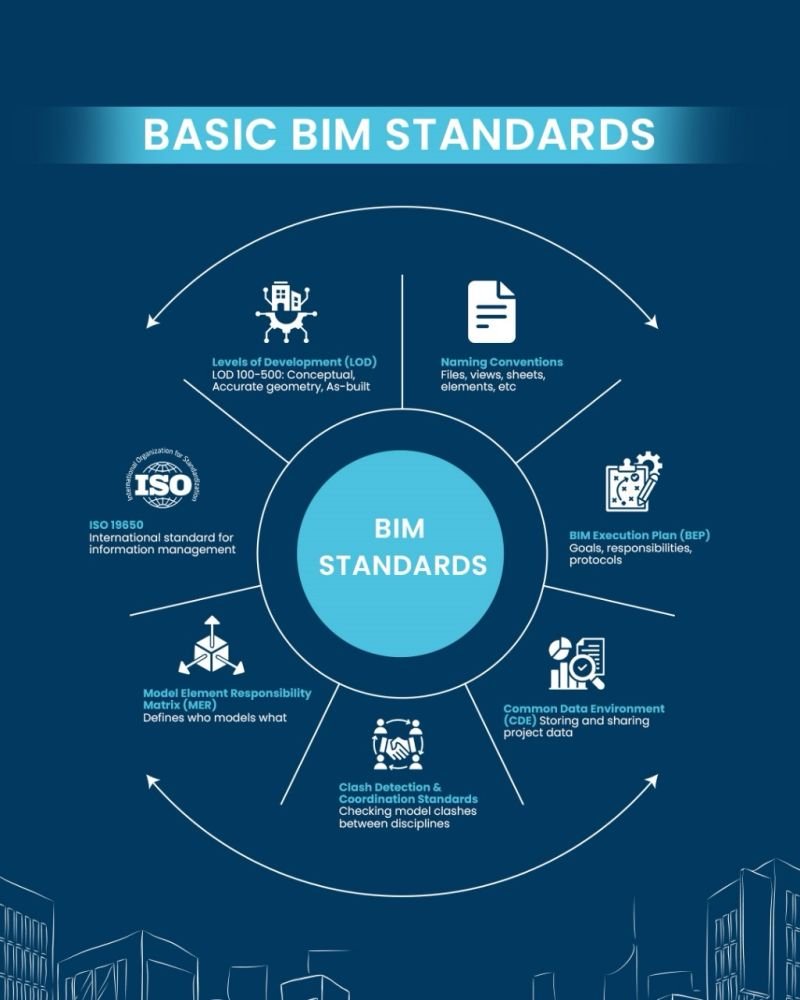
BIM Standards are structured rules for creating, organizing, and sharing digital building information.
They give all project teams a common language for modeling and data exchange.
They cover three main areas:
- Naming conventions and file structure
- Level of detail required at each project stage
- Roles, responsibilities, and approval workflows in a Common Data Environment (CDE)
BIM standards can be internal, project-specific, or international like ISO 19650.
Each type serves a different purpose but all work together to keep information reliable.
Importance of BIM Standards
Standards reduce the most common project risks:
- Miscommunication between disciplines
- Rework caused by inconsistent models
- Delays in approvals and coordination
- Disputes over incomplete or unstructured data
From a business side, clear standards mean:
- Fewer change orders
- Faster project approvals
- Smoother handover to the owner
- Better asset tracking and maintenance planning
Standards also make teams more scalable.
New members onboard faster and content is reusable across projects.
Global BIM Governance Frameworks and Technical Standards
ISO 19650 is the most recognized global BIM standard.
It defines who does what, when, and how information moves between parties.
It is software-neutral and works with Revit, Archicad, Tekla, and others.
Key technical components include:
- CDE – Common Data Environment for centralized information management
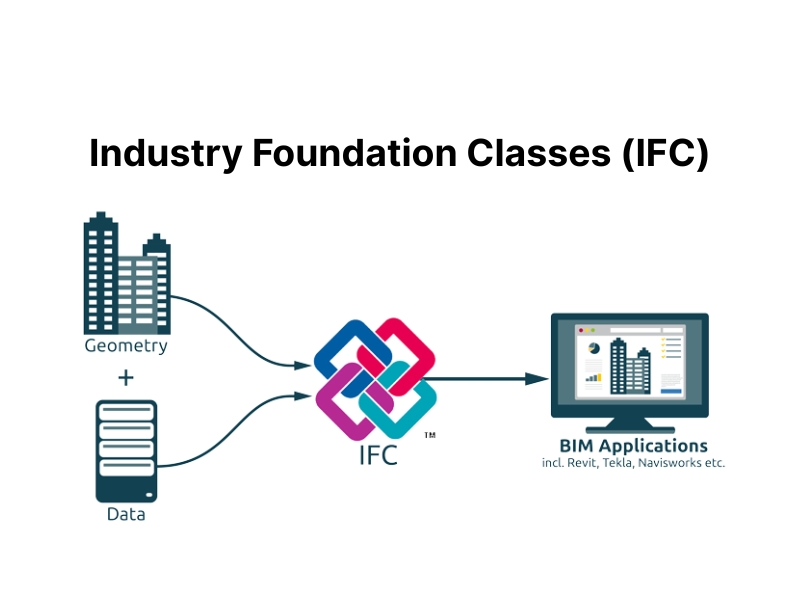
- IFC – Open format for model exchange between different software
- Classification systems—such as UniClass or OmniClass to categorize elements
Many countries adapt ISO 19650 into local guidance documents with their own templates and requirements.
BIM Standards in Saudi Arabia
Saudi Arabia’s BIM adoption is driven by Vision 2030 and major infrastructure investments.
Large public projects increasingly require BIM-compliant deliverables.
Key points:
- Standards align with ISO 19650 and Saudi Building Code
- Public projects require structured BIM Execution Plans and data drops
- International consultants harmonize global standards with local requirements
- BIM compliance is now a competitive advantage in major tenders
Saudi Arabia is moving toward more formal, possibly mandated BIM frameworks in the near future.
BIM Standards in the United Arab Emirates
The UAE is a regional leader in BIM mandates and regulations.
Dubai Municipality requirements include:
- BIM is compulsory for large and high-value developments
- Submissions must meet specific file formats and coordination processes
- BIM models are tied directly to building permit procedures
Abu Dhabi and major UAE developers have their own BIM guidelines that:
- Align with ISO 19650 principles
- Address local building codes and approval workflows
- Define minimum BIM uses per project type
For firms targeting UAE projects, certified BIM experience under local mandates is essential for winning bids and avoiding permit delays.
Challenges in Adopting BIM Standards
The main challenges firms face when adopting BIM standards:
- Change resistance – Teams used to 2D workflows are hesitant to shift
- Inconsistent application – Standards exist on paper but are not followed on-site
- Software compatibility – Different platforms interpret IFC exports differently
- Poor training – Standards introduced late or without clear project benefit
- No governance – Without regular audits, standards become outdated documents
To succeed, organizations need:
- Leadership support
- Practical training programs
- Well-designed content libraries
- Regular feedback loops to update standards based on real project experience
Need expert support to get started? Our BIM Modeling Services team at AMC Engineer can guide you through every step of BIM implementation. {Contact us}
Conclusion
Standardizing Building Information Modeling (BIM) protocols is essential for ensuring consistency, interoperability, and long-term asset management efficiency throughout a project’s lifecycle. By implementing structured naming conventions, unified coding systems, and clear modeling requirements, project teams can seamlessly transition from design and construction to effective facility operations.
FAQS About BIM Standards
What are BIM Standards?
BIM Standards are structured rules that define how building information is created, organized, and shared across a project. They ensure consistency in modeling, naming, and data exchange between all project teams.
Why are BIM Standards important?
They reduce errors, rework, and miscommunication. Key benefits include:
- Faster project coordination and approvals
- Fewer change orders and disputes
- Smoother handover to asset owners
- Better lifecycle data for facility management
What is ISO 19650?
ISO 19650 is the international standard for managing information using BIM. It defines roles, workflows, and delivery processes across the full project lifecycle. It is software-neutral and globally recognized.
What is a Common Data Environment (CDE)?
A CDE is a shared digital workspace where all project information is stored, reviewed, and approved. It is a core requirement in ISO 19650 and ensures teams access one reliable source of truth.
Is BIM mandatory in Saudi Arabia?
BIM is increasingly required on large public and government projects in Saudi Arabia, aligned with Vision 2030. Many clients now request ISO 19650-compliant BIM Execution Plans as part of tender submissions.
Is BIM mandatory in the UAE?
Yes. Dubai Municipality mandates BIM for large and high-value developments. Submissions must meet specific format, coordination, and permit requirements set by local authorities.
What is a BIM Execution Plan (BEP)?
A BEP is a document that defines how BIM will be implemented on a specific project. It covers modeling standards, software, roles, deliverables, and milestones agreed by all project parties.
What is Level of Development (LOD) in BIM?
LOD defines how detailed and reliable a BIM element is at each project stage:
- LOD 100 – Conceptual massing
- LOD 200 – Approximate geometry
- LOD 300 – Accurate geometry and data
- LOD 400 – Fabrication-ready detail
- LOD 500 – As-built, field-verified
What is IFC in BIM Standards?
IFC (Industry Foundation Classes) is an open file format that allows BIM models to be exchanged between different software platforms without losing data. It is a key technical component of global BIM interoperability.
How do I start implementing BIM Standards in my organization?
Start with these steps:
- Define your BIM goals and project requirements
- Adopt ISO 19650 as your governance framework
- Create internal templates, naming conventions, and a CDE
- Train your team on BIM workflows and tools
- Review and update your standards after each project