The construction industry is no longer just about bricks, steel, and blueprints. Digital twin technology in construction is rewriting the rules — giving teams a living, breathing virtual replica of every asset that updates in real time, predicts problems before they occur, and connects every discipline from design to handover. If you’re working on complex projects in UAE, this is the technology you can’t afford to ignore.
What Are Digital Twins in Construction?
A digital twin in construction is a virtual, dynamic representation of a physical asset that is continuously updated with real‑time or near‑real‑time data from sensors, BIM models, and project management tools.
Unlike a static 3D model or BIM, a digital twin is live — it reflects changes in design, site progress, material status, and even performance data such as energy use or structural behaviour. In construction, digital twins help teams visualize the project as it exists now, not just as it was originally designed.
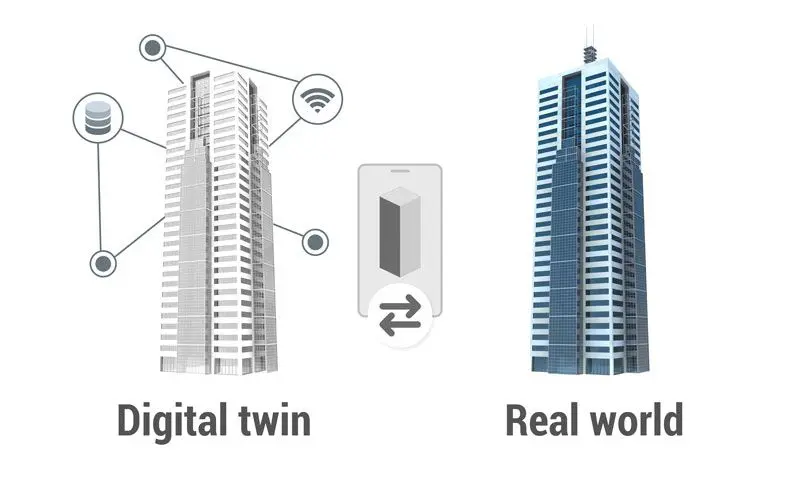
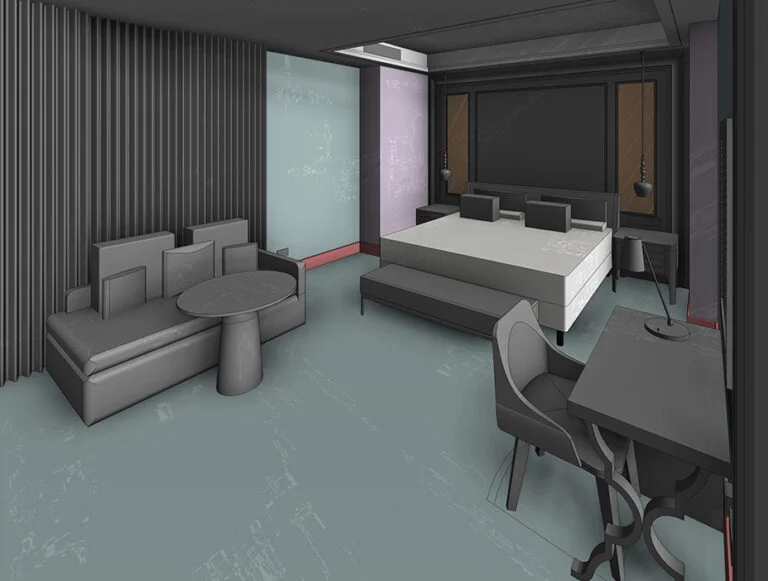
A digital twin starts as a detailed BIM modeling foundation, then evolves into a live, data-synced replica of the physical asset.
What Is a Digital Twin Technology for Architecture, Engineering, and Construction?
For architecture, engineering, and construction (AEC), a digital twin is more than a visualization tool—it is a data‑driven platform that connects:
- Architectural intent
- Structural and MEP design
- Construction sequence and progress
- Asset data and performance metrics
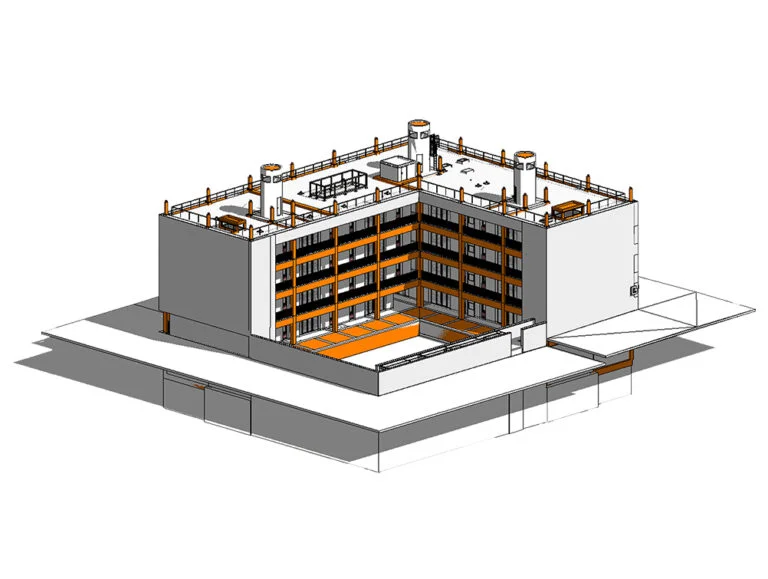
At the early stages, the digital twin may start as a BIM model enriched with time and cost data (4D/5D BIM). As the project moves into construction and operation, sensors, IoT devices, and facility‑management systems feed data into the twin, turning it into a living, updatable digital counterpart of the physical asset.
How to Use Digital Twin Technology in Construction
Digital twin technology can be applied at different stages of a project lifecycle. Typical use cases in construction include:
- Pre‑construction planning
- Visualizing different design options in a 3D environment.
- Running clash detection and coordination between disciplines.
- Testing construction sequences and logistics.
- Construction phase
- Tracking progress against the 4D schedule in the digital twin.
- Monitoring material deliveries, equipment locations, and workforce deployment.
- Detecting deviations from the approved design and mapping issues on the model.
- Post‑construction and operations
- Using the digital twin as a facility management dashboard for maintenance, energy management, and safety monitoring.
- Planning future modifications, renovations, or expansions with accurate as‑built data.
The Components of a Construction Digital Twin
A construction digital twin typically consists of several key components working together:
- 3D / BIM model
The core geometry and spatial representation of the project. - Time and schedule data (4D)
Linking activities to the model so that the twin reflects the construction timeline. - Cost and resource data (5D)
Connecting quantities, budgets, and material flows to the model. - IoT sensors and telemetry
Devices that capture real‑time data such as loads, deformation, temperature, or energy use. - Data analytics and dashboards
Tools that visualize performance, highlight risks, and provide insights for decision‑making. - Integration with project management systems
Linking the twin with tools for defects tracking, safety management, procurement, and document control.
When these components are combined, the digital twin becomes a central hub for project information rather than a collection of isolated models and spreadsheets.
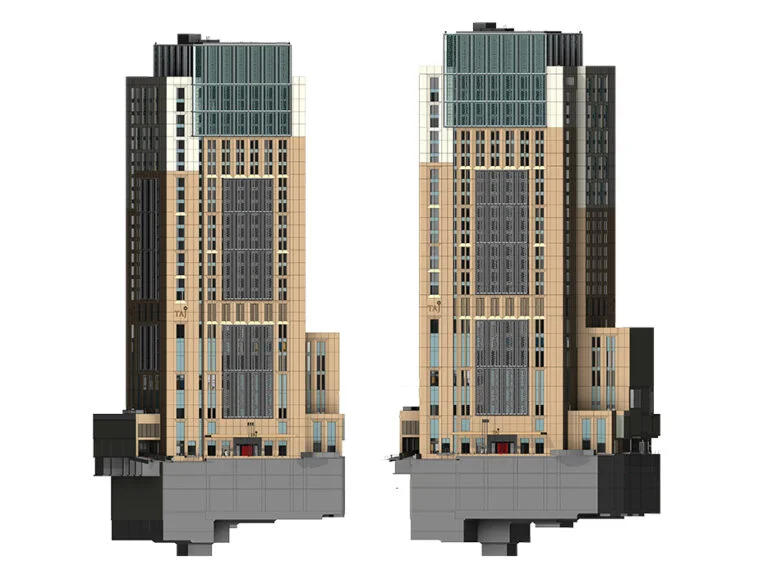
How Digital Twins Connect Design and Build Workflows
One of the biggest strengths of digital twin technology is its ability to bridge the gap between design workflows and construction workflows. Traditionally, design information was handed over to the contractor, often leading to misinterpretation, rework, and delays.
With a digital twin:
- Design changes are immediately reflected in the model and rebroadcast to all stakeholders.
- Shop drawings, MEP coordination, and fabrication details can be extracted directly from the twin, reducing manual rework between BIM and CAD.
- Site progress, as‑built conditions, and field issues are fed back into the twin, allowing designers to refine details based on real‑world conditions.
For projects in UAE , this connection is especially valuable in complex developments where coordination between multiple consultants, contractors, and subcontractors must be tightly managed.
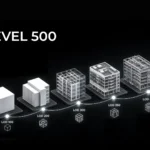
The 5 Levels of Digital Twin Technology
Digital twin maturity can be described in several levels, typically ranging from basic visualization to full‑fledged intelligence:
- Level 1 – Visualization
A 3D or BIM model used mainly for visualization and coordination, with limited data attached. - Level 2 – Information integration
The model is enriched with schedules, costs, and asset data, enabling basic 4D/5D workflows. - Level 3 – Data‑driven insight
The digital twin receives live data from the site or sensors, allowing basic performance monitoring and risk analysis. - Level 4 – Predictive capability
Analytics and simulations predict potential issues (e.g., delays, clashes, or performance gaps) before they occur. - Level 5 – Closed‑loop optimization
The twin not only predicts issues but also suggests or executes corrective actions automatically or semi‑automatically (e.g., adjusting schedules, rerouting logistics, or optimizing MEP routing).
In many construction markets, including United Arab Emirates, most projects are currently at Level 2 or 3, but rapid adoption of BIM, IoT, and cloud platforms is pushing more projects toward Level 4 and beyond.
4 Benefits of Digital Twin Technology in construction
Adopting digital twin technology in construction brings several tangible benefits:
- Improved coordination and clash detection
With a unified model that integrates architectural, structural, and MEP information, clashes are detected and resolved early, reducing rework on site. - Better schedule and cost control
By linking the model with time and cost data, teams can visualize progress, forecast delays, and adjust resources before small issues become major problems. - Enhanced safety and quality
Digital twins can highlight areas of high risk, track safety compliance, and ensure that as‑built conditions match design intent. - Efficient handover and operations
The digital twin becomes a powerful tool for facility managers, safety officers, and maintenance teams after project completion, supporting smart operations and asset management.
Solving Top Challenges with Digital Twin Use in Construction Projects
Construction projects face common challenges such as design clashes, schedule delays, cost overruns, poor communication, and incomplete as‑built records. Digital twins help address these issues by:
- Reducing design clashes
Early coordination in the twin prevents conflicts between MEP, structure, and façade elements. - Improving communication
All stakeholders work from the same, constantly updated model, limiting confusion and misinterpretation. - Avoiding late‑stage changes
Impact analysis of design changes in the twin allows teams to assess consequences before they are implemented on site. - Capturing as‑built information
Field data is continuously fed into the twin, creating an accurate record that supports maintenance, renovations, and future expansions.
For large‑scale projects in Dubai and other UAE cities, integrating digital twins into the workflow can significantly reduce coordination effort and risk.
Traditional Construction Methods vs. Digital Twin Technology–Enhanced Methods
| Aspect | Traditional construction methods | Digital twin technolog |
|---|---|---|
| Information flow | Documents, 2D drawings, and fragmented data sources. | Centralized, model‑based, data‑rich environment. |
| Coordination | Relies heavily on meetings and manual checking. | Clash detection and coordination in the digital twin. |
| Planning and scheduling | Often based on static Gantt charts. | 4D/5D visualizations show schedule and cost in the model. |
| Change management | Changes are tracked manually and may not be fully updated. | Changes are updated in the model and reflected across disciplines. |
| Handover and operations | Limited as‑built data and paper‑based records. | Digital twin preserves design, construction, and performance data. |
Why Choose AMC Engineering
When it comes to digital twin technology in construction, AMC Engineering brings a BIM‑centric, data‑driven approach to design, construction, and documentation.
Our end-to-end services include BIM modeling and clash detection, MEP coordination, shop drawings, and digital-twin-ready model delivery for projects across Egypt and Saudi Arabia.”
Key advantages of choosing AMC Engineering:
- BIM‑driven digital twin workflows
We use BIM models as the foundation for digital twins, integrating 4D/5D data, clash detection, and coordination to support construction and operations. - Strong UAE‑market experience
We understand the typical requirements of consultants and contractors in Dubai and other UAE cities, including local standards, project timelines, and handover expectations. - End‑to‑end services
Our services span BIM modeling, clash detection, shop drawings, BIM documentation, BIM‑based BOQ, and digital‑twin‑ready models, giving you one integrated partner from design to handover. - Fast, reliable support
We focus on clear communication, responsive revisions, and carefully managed workflows that keep projects moving smoothly from drawing board to finished asset.
Conclusion
Digital twin technology is rapidly becoming a cornerstone of modern construction and infrastructure projects. In markets like UAE , where large‑scale, complex developments are common, digital twins offer a powerful way to connect design, construction, and operations while reducing risk and improving transparency.
FAQs About Digital Twin Technology
Q1.Is a digital twin the same as BIM?
No. BIM is a static design and construction model, while a digital twin is a live, real-time replica that continuously syncs with the physical asset through IoT sensors. BIM is the foundation of a digital twin, but not the same thing.
Q2.What is digital twin technology and its core principles?
A digital twin is a real-time virtual copy of a physical asset. Its core principles are real-time simulation, bidirectional data communication, predictive modeling, scenario testing, and continuous feedback between the physical and digital environments.
Q3.What are the four types of digital twin technology?
- Digital Model — Static, no automatic data sync
- Digital Shadow — One-way sync from physical to digital
- Digital Twin — Full two-way real-time data exchange
- Digital Twin of Organization (DTO) — Models entire organizational systems and workflows
Q4.What is digital twin technology in construction?
It is an interactive virtual replica of a building or infrastructure project that evolves throughout its lifecycle by combining BIM models, IoT sensors, and AI analytics to monitor, simulate, and optimize performance in real time.
Q5.What are the leading digital twin platforms for construction?
The most widely used platforms include Autodesk Forma, Matterport, Microsoft Azure Digital Twins, Siemens Building X, Hexagon, Schneider Electric EcoStruxure, and Honeywell Forge.
Q6.What are the best practices for integrating digital twin technology into construction workflows?
Start with a complete BIM model, install IoT sensors during construction, use a Common Data Environment (CDE), define clear use cases first, and train facility management teams before project handover.
Q7.How do digital twin technology improve project lifecycle management?
They reduce project duration by 8–15%, cut rework costs by up to 12%, lower maintenance costs by one-third, improve post-construction asset management, and can increase building market value by 7–12%.
Q8.What is the ROI of digital twin implementation in construction?
Digital twins deliver measurable returns through schedule compression, rework reduction, predictive maintenance savings, more accurate bidding, and long-term facility management value. ROI often doubles or triples by the third major project as team proficiency grows.
Q9.How do digital twins improve construction safety?
They enable proactive safety management by identifying hazard zones in 4D models before work begins, tracking workers in real time through wearable sensors, and feeding incident data back into the twin to continuously improve safety protocols.
Q10.Which companies offer digital twin consulting in UAE construction?
AMC Engineering delivers fully coordinated BIM models, clash detection, MEP coordination, and as-built documentation — the essential foundation for any digital twin strategy. With proven experience across projects in Egypt and Saudi Arabia, we help construction teams build digital-twin-ready models from day one, ensuring a seamless transition from design and construction through to operations and facility management.