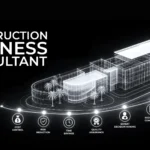
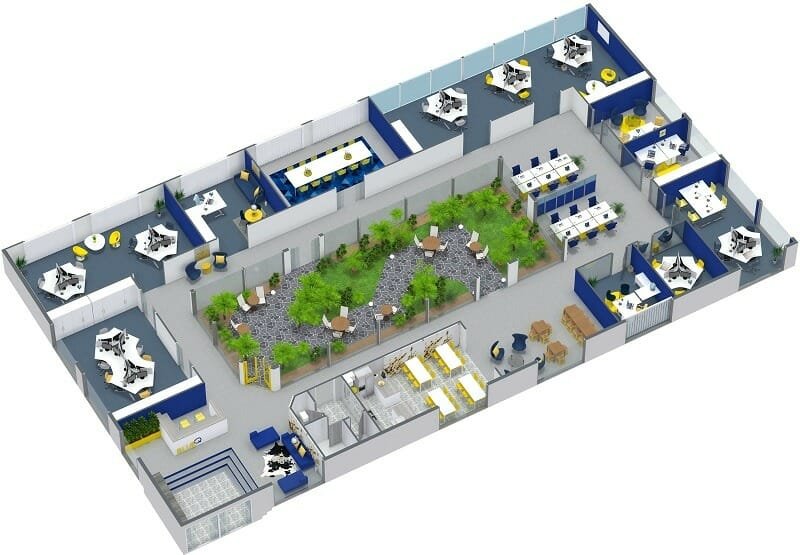
Commercial building design is a strategic process that integrates functionality, safety, and long-term business value. A well-planned design optimizes operations, reduces costs, and supports sustainable growth for your business.
Aspects to Consider in Commercial Building Design
When planning a commercial project, several key factors ensure design efficiency and regulatory compliance:
- Site Analysis: Evaluating topography, access, and local utility infrastructure.
- Functionality: Aligning the building layout with specific business operations and user needs.
- Space Planning: Creating flexible, efficient layouts that adapt to future growth.
- Circulation Flow: Designing intuitive paths for occupants, staff, and service teams.
- Building Systems: Integrating structural, mechanical, electrical, and plumbing (MEP) systems early.
- Sustainability: Implementing energy-efficient solutions and maximizing natural resources.
- Accessibility: Ensuring full compliance with safety codes and inclusivity standards.
For complex projects requiring safe and efficient foundations, our professional structural engineering services ensure that every building element is designed for stability and durability.
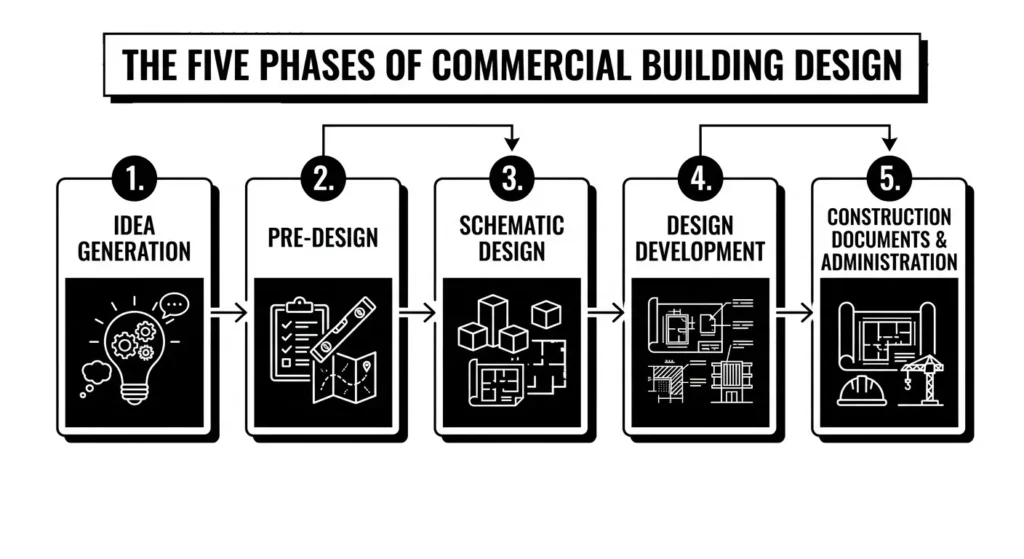
The Five Phases of Commercial Building Design
The design process follows five structured stages to ensure the project remains on track and within budget:
1. Idea Generation
- Defining the project vision, core objectives, and budget expectations.
- Identifying target users and the building’s functional requirements.
2. Pre-Design
- Conducting feasibility studies and detailed site analysis.
- Reviewing local regulations and identifying potential project risks.
3. Schematic Design
- Developing initial layout concepts and massing studies.
- Finalizing the general spatial organization and building form.
4. Design Development
- Refining architectural details, materials, and structural systems.
- Coordinating MEP integration to ensure the design is realistic and buildable.
5. Construction Documents and Administration
- Producing detailed technical drawings and precise specifications for permits.
- Providing support during construction to ensure adherence to design intent.
Who’s Who in the Design Process
Successful execution requires a multidisciplinary team to manage various aspects of the project:
- Owner/Developer: Sets the project goals, budget, and final vision.
- Architect: Leads the design, aesthetics, and overall project coordination.
- Structural Engineer: Designs the load-bearing systems for safety and stability.
- MEP Engineers: Manage mechanical, electrical, and plumbing systems.
- Interior Designer: Focuses on finishes, ergonomics, and brand experience.
- Contractor: Oversees site execution, labor, and material management.
Zoning and Permits
Zoning and permits are critical legal requirements that must be addressed early to avoid project delays:
- Land Use: Ensuring the site is zoned for the intended commercial purpose.
- Approval Compliance: Meeting municipal requirements for height, setbacks, and occupancy.
How Long is the Design Process?
The timeline varies based on project complexity and regulatory requirements:
- Small Projects: Generally require a faster design and permitting cycle.
- Complex Projects: Large developments or specialized facilities often require extended design and approval periods.
Modern Commercial Building Design
Contemporary trends are shifting toward smarter, high-performance environments:
- Flexibility: Utilizing modular planning to accommodate changing business needs.
- Sustainability: Prioritizing energy-efficient systems and environmentally friendly materials.
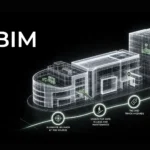
- Digital Integration: Leveraging Building Information Modeling (BIM) for better coordination.
- Human-Centric Design: Emphasizing natural lighting, acoustics, and user comfort.
Conclusion
Effective commercial building design requires a balanced approach between business goals and technical execution. By following these structured phases, you ensure your building remains a durable, efficient, and valuable asset for years to come.
FAQ About Commercial Building Design
Q1: What are the key considerations for sustainable commercial building design in hot climates?
Design must focus on reducing solar heat gain and promoting natural cooling. Key strategies include optimizing building orientation along a north-south axis, using high-performance insulation, installing shading devices (like louvers and overhangs), and utilizing materials with high thermal mass to stabilize indoor temperatures.
Q2: How can you choose energy-efficient materials for commercial building design?
Prioritize materials that enhance the building envelope’s thermal performance. Look for high R-value insulation (such as ICFs), double or triple-glazed windows to minimize heat transfer, and light-colored or reflective roofing to reduce solar absorption.
Q3: What factors influence commercial building design?
The design is primarily shaped by site context (topography, wind, solar path), functional requirements (business operations, user flow), flexibility for future expansion, integration of smart building technology, and strict adherence to local zoning laws and building codes.
Q4: How do you plan a commercial building?
Planning begins with defining the project vision and budget, followed by a feasibility study and site analysis. The team then develops a functional space program and assembles a multidisciplinary team (architects, engineers, etc.) to translate the vision into technical plans.
Q5: What is the 80/20 rule in architecture?
Derived from the Pareto Principle, it suggests that 20% of design decisions—such as the initial orientation, massing, and layout—account for 80% of the building’s overall performance, efficiency, and functional success.
Q6: What are the steps to build a commercial building?
The standard process involves: 1) Idea Generation (vision/budget), 2) Pre-Design (research/feasibility), 3) Schematic Design (concept layout), 4) Design Development (technical refinement), and 5) Construction Documents (finalizing plans for permits and construction).
Q7: What are the 7 principles of design in architecture?
The principles include Balance (visual weight distribution), Proportion (scale relationships), Rhythm (repeated patterns), Emphasis (focal points), Contrast (opposing elements), Unity (harmonious whole), and Gradation (step-by-step transition in size or shape).