A well-planned construction time line is the backbone of every successful construction project. Whether you are building a villa, a commercial tower, or a large infrastructure development, understanding how to create and manage your construction time line can mean the difference between on-time delivery and costly delays.
What Is a Construction Time line?
A construction time line is a detailed schedule that outlines every phase, task, and milestone of a construction project from groundbreaking to final handover.
It defines who does what, when it starts, and when it must be completed.
Think of it as a roadmap that keeps every contractor, engineer, and stakeholder moving in the same direction at the right pace.
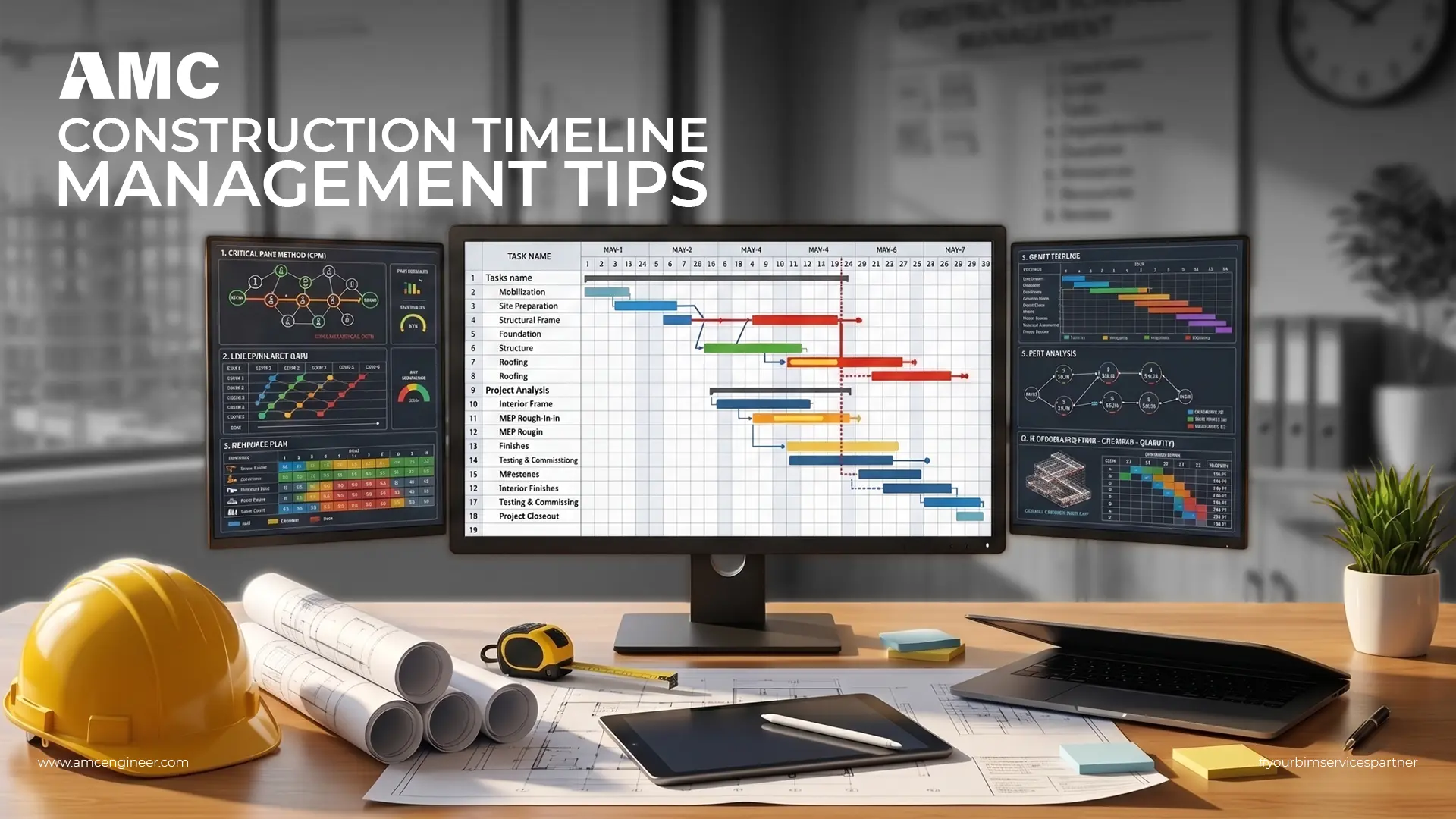
A strong construction timeline includes task durations, dependencies between activities, resource allocation, and key approval milestones — all organized to give the project team full visibility from day one.
Why Are Construction Timelines Important?
- A construction time line is not just a planning document — it is a project management tool that directly impacts your budget, quality, and client satisfaction. Without a clear timeline, projects suffer from miscommunication, overlapping trades, and missed deadlines.
- A solid construction time line helps teams coordinate subcontractors efficiently, identify potential delays before they happen, control costs by avoiding idle time and last-minute rushes, meet contractual deadlines and avoid penalty clauses, and give clients confidence through transparent progress reporting.
In short, a well-managed construction timeline keeps everyone accountable and the project profitable.
What Factors Can Impact a Construction Timeline?
Even the most carefully planned construction time line can be affected by unexpected challenges. The most common factors include :
- weather conditions, which can halt outdoor work for days or even weeks.
- Permit and approval delays from local authorities are another frequent cause of schedule disruption.
- Material shortages or late deliveries push dependent tasks back significantly.
- Labor availability and subcontractor scheduling conflicts create gaps in workflow.
- Design changes and client revisions mid-project require rework that consumes both time and budget.
- Site conditions such as unforeseen underground utilities or soil issues can also cause major delays.
Understanding these risks early allows your team to build contingency time into the construction time line and respond proactively rather than reactively.
How to Prepare a Construction Timeline in 10 Simple Steps
Creating an effective construction time line requires careful planning and collaboration across all project stakeholders. Follow these ten steps to build a timeline that works.
Step 1 — Define the Project Scope: Clearly outline all work to be completed, including all deliverables and exclusions.
Step 2 — Break the Project into Phases: Divide the project into logical phases such as design, permits, foundation, structure, MEP, and finishes.
Step 3 — List All Tasks and Activities: Identify every task within each phase, no matter how small.
Step 4 — Estimate Task Durations: Work with your team leads and subcontractors to assign realistic durations to each task.
Step 5 — Identify Task Dependencies: Determine which tasks must be completed before others can begin.
Step 6 — Assign Resources: Allocate labor, equipment, and materials to each task based on availability.
Step 7 — Build the Schedule: Use project management software to map tasks on a Gantt chart or timeline view.
Step 8 — Add Milestones: Mark key review points, inspections, and client approvals throughout the timeline.
Step 9 — Add Buffer Time: Include contingency allowances for weather, approvals, and unforeseen conditions.
Step 10 — Review and Approve: Share the construction time line with all stakeholders for review and sign-off before work begins.
Avoiding Construction Timeline Delays
Delays are one of the biggest threats to any construction project, but most can be prevented with the right approach.
- Start by locking in material orders and subcontractor agreements well before they are needed on site.
- Conduct weekly progress meetings to catch slippage early and adjust the schedule before small delays become major problems.
- Use a digital construction time line tool that sends automatic alerts when tasks fall behind. Maintain clear communication channels between the site team, consultants, and client to ensure decisions are made quickly.
Always have a contingency plan for your most critical path activities, as any delay to these tasks directly extends the overall project duration.
3 Construction Timeline Management Tips
Tip 1 — Focus on the Critical Path: Identify the sequence of tasks that determines the minimum project duration. Protecting these activities from delays is the single most important thing you can do to keep your construction timeline on track.
Tip 2 — Update the Timeline Weekly: A construction timeline is a living document. Update it every week to reflect actual progress, revised durations, and any scope changes. An outdated timeline is worse than no timeline at all.
Tip 3 — Empower Your Site Team: Give your site engineers and foremen the authority to flag delays and propose solutions in real time. The people closest to the work often see problems first, and their input is essential for keeping the construction timeline accurate and achievable.
Keep Your Construction Timeline on Track with AMC Engineer
At AMC Engineering, we understand that time is money in construction.
Our experienced project management and BIM teams work closely with clients to develop realistic, data-driven construction time lines that are built to be followed, not just filed away.
We use industry-leading tools and proven processes to monitor progress, resolve conflicts early, and keep your project moving forward — on time and within budget. Whether you are starting a new development or recovering a delayed project, AMC Engineer has the expertise to get your construction time line back on track.
Construction Phase Breakdown: Month-by-Month Expectations
Understanding what happens at each stage of your project helps set realistic expectations for clients and teams alike.
Months 1–2 — Pre-Construction: Project scope finalization, design approvals, permit applications, contractor procurement, and site preparation begin during this phase.
Months 3–4 — Foundation and Structure: Excavation, foundation works, and the start of the structural frame dominate this period. This is often the most weather-sensitive phase of the construction timeline.
Months 5–7 — Structural Completion: The full structural frame, floors, and roof are completed. External walls and waterproofing begin toward the end of this phase.
Months 8–10 — MEP Rough-In: Mechanical, electrical, and plumbing systems are installed within the structure before walls are closed. Coordination is critical during this phase to avoid costly rework.
Months 11–13 — Internal Finishes: Plastering, tiling, joinery, painting, and fixture installation take place. This phase requires the most subcontractor coordination on the construction timeline.
Month 14 — Commissioning and Handover: Systems are tested, inspections are completed, snagging lists are resolved, and the project is formally handed over to the client.
Interior Construction and Finishes: The Detail Phase
The interior finishes phase is often underestimated in construction timelines, yet it is one of the most complex. Multiple trades — including plasterers, tilers, carpenters, painters, electricians, and plumbers — must work in a carefully coordinated sequence within the same spaces.
Delays in material deliveries, particularly for imported items like custom joinery or specialized fixtures, can push the entire construction timeline back significantly.
Successful management of this phase requires a detailed look-ahead schedule updated weekly, strict sequencing of trades to avoid conflict, early procurement of long-lead items, and daily site coordination meetings to resolve clashes in real time.
Factors That Influence Your Construction Time line
Every project is unique, and several key variables will shape how long your construction timeline needs to be.
- Project size and complexity are the most obvious factors — a larger or more technically demanding project simply requires more time.
- The availability and experience of your contractor and subcontractor teams has a direct impact on productivity and quality.
- Local authority approval timelines vary significantly by location and project type and must be factored in from the start.
- The procurement lead time for key materials and equipment, particularly for imported or custom items, must be built into the construction timeline well in advance.
Finally, the client’s decision-making speed plays a major role — slow approvals on design changes or material selections are one of the most common causes of avoidable delays on any construction time line.
Final Thoughts
A strong construction time line is not just a schedule — it is your project’s greatest asset. It keeps your team aligned, your budget protected, and your clients confident from the first day of work to the final handover.
The difference between a project that finishes on time and one that spirals into delays often comes down to one thing — how well the construction timeline was planned and managed from the start.
At AMC Engineer, we bring the expertise, tools, and dedication to turn your construction vision into a delivered reality—on time, every time.
📩 Ready to build smarter? Contact AMC Engineer today and let us manage your construction timeline from start to finish.
FAQ About Construction timeline
How to Build an Effective Construction Timeline for a New Residential Property?
Building an effective construction timeline for a residential property starts with defining the full project scope, then breaking it into clear phases such as design, foundation, structure, MEP, and finishes. Each phase is assigned realistic durations, key milestones are identified, and a contingency buffer of 10 to 15 percent is added for unexpected delays. The timeline is then reviewed and approved by all stakeholders before work begins to ensure full team alignment from day one.
How Can I Track the Progress of My Construction Project Using Digital Tools?
Digital platforms such as Autodesk Construction Cloud, Procore, and Microsoft Project allow teams to monitor real-time progress against the planned construction timeline, flag delays automatically, and generate instant reports. Mobile apps enable site supervisors to submit daily updates and photos directly from the field, while 4D BIM simulation visualizes the entire build sequence to identify scheduling conflicts before they occur on site.
What Are the Essential Phases to Include in a Commercial Building Project Schedule?
A commercial building construction timeline must include pre-construction and approvals, site preparation and earthworks, foundation works, structural frame, external envelope and cladding, MEP installation, internal finishes, and final commissioning and handover. Skipping or underestimating any of these phases is one of the most common causes of schedule overruns on commercial projects.
Which Companies Offer Project Management Software for Construction Timelines in Saudi Arabia?
Leading options in Saudi Arabia include Autodesk Construction Cloud, Procore, Oracle Primavera P6, and Microsoft Project. AMC Engineering also provides expert project management consultancy across the Kingdom, helping clients select and implement the right tools to keep their construction timeline accurate, updated, and fully under control.
What Common Challenges Affect Construction Project Durations in Arid Climates?
Extreme heat, sandstorms, and high humidity are the biggest climate-related threats to a construction timeline in arid regions like Saudi Arabia. Reduced outdoor working hours during summer, material import delays, and concrete curing challenges can extend activity durations by 20 to 30 percent. Experienced project managers address these risks by building realistic buffers and proactive contingency plans into the schedule from the very start.
What Is a Construction Timeline?
A construction timeline is a structured schedule that maps every task, phase, and milestone of a project from mobilization to final handover. It defines task sequences, durations, dependencies, and responsibilities, keeping the entire project team aligned and accountable. In modern construction, digital timelines are integrated with BIM models and cost plans to create a fully connected project management system that drives on-time, on-budget delivery.