Every successful home — from a single villa to a large residential development — begins not with concrete, but with a set of precise drawings. Residential drafting is the discipline that turns a design idea into accurate, buildable, code-compliant plans, and getting it right is the difference between a smooth build and a costly one.
As Saudi Arabia’s housing sector expands under Vision 2030, the quality of those drawings has a direct, measurable impact on cost, approval timelines, and the final result.
This guide covers what residential drafting is, why it matters, the common mistakes to avoid, how long it takes, what a complete drafting package should include, current Saudi permit requirements, and the factors that separate a smooth build from a costly one.
Key takeaways
- Residential drafting translates a design concept into scaled, technical drawings that contractors build from and authorities approve.
- Most drafting errors that cause delays on site — clashing disciplines, missing dimensions, ignored setbacks — are catchable before construction starts.
- A complete drafting package is more than a floor plan: it includes site, structural, MEP, and detail drawings, all coordinated together.
- Saudi municipal requirements change periodically (most recently in 2025, affecting construction ratios and setbacks for residential villas) — drawings need to reflect current rules, not last year’s.
- The right drafting partner saves money twice: once in avoided rework, and again in faster permit approval.
What Is Residential Drafting?
Residential drafting is the process of creating detailed technical drawings for villas, houses, and apartment buildings — the documents contractors build from and authorities use to grant permits.
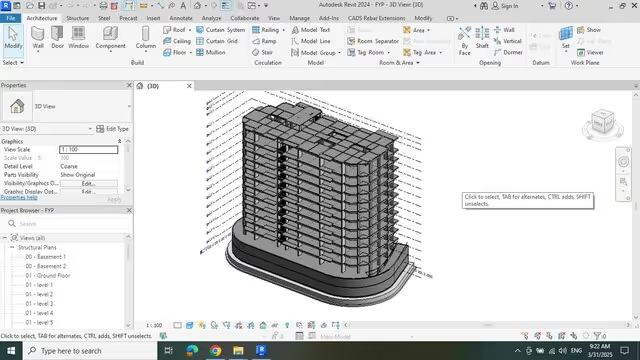
A residential drafter produces plans, elevations, sections, and detailed layouts that communicate exactly how a home should be constructed: its dimensions, materials, structure, and services. Most drafting today is done in CAD software such as AutoCAD, increasingly alongside BIM platforms like Revit, which add 3D intelligence and cross-discipline coordination to the drawings.
While an architect focuses on design concept and creativity, the drafter’s job is to make sure that vision is documented accurately enough to build.
Why Residential Drafting Matters
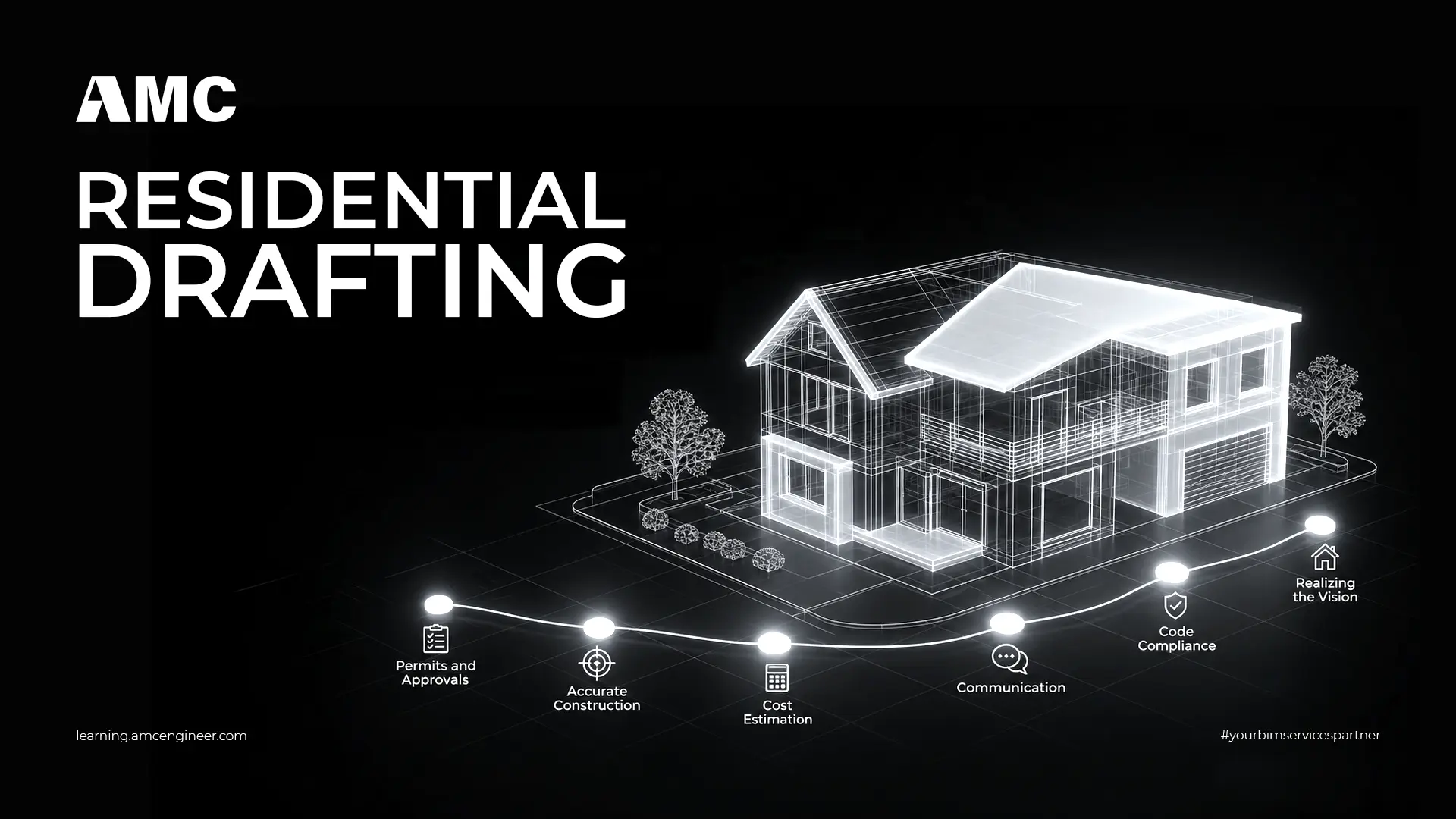
Good drafting is far more than drawing lines — it underpins the entire project, in six concrete ways:
- Permits and approvals. Authorities require accurate, compliant drawings before construction can begin. In Saudi Arabia, that means meeting Saudi Building Code (SBC) requirements and municipal approval through the Balady platform.
- Accurate construction. Clear drawings reduce errors, guesswork, and costly rework on site.
- Cost estimation. Detailed drawings allow accurate material takeoffs and budgeting.
- Communication. Drawings are the common language between owner, architect, engineer, and contractor.
- Code compliance. Proper drafting ensures the home meets safety, structural, and regulatory standards.
- Realizing the vision. Precise documentation ensures the finished home matches what the owner actually wants.
In short: the quality of the drawings sets the ceiling for the quality of the build.
Common Mistakes to Avoid in Residential Drawings
Many problems on site trace straight back to drafting errors. The most common:
- Inaccurate measurements and scale errors that cause components not to fit.
- Missing dimensions or details that force guesswork on site.
- Ignoring building codes and local regulations, risking rejected permits or unsafe construction.
- Poor coordination between disciplines — architectural, structural, and MEP drawings that clash with one another.
- Neglecting site conditions and orientation — failing to account for the plot, sun path, and access.
- Overlooking climate — in the Saudi environment, ignoring orientation, shading, and thermal performance leads to hot, inefficient homes.
- Overlooking privacy requirements — Saudi homes typically need careful planning of guest reception (majlis), family areas, and window placement to respect privacy norms.
- Incomplete documentation that leaves contractors filling gaps with assumptions.
Every one of these is avoidable with experienced drafting and proper coordination between disciplines.
How Long Does the Drafting Process Take?
There’s no single answer — timelines depend on project size, scope, level of detail, and how many revision rounds the brief goes through.
- Project size and complexity. A simple villa takes far less time than a large custom home or multi-unit development.
- Scope of the drawings. Concept plans are quicker; a full construction documentation set takes longer.
- Level of detail required. More detail and more disciplines mean more time.
- Revisions. Client changes and approval cycles can extend the timeline significantly.
- Tools and team. Experienced drafters using BIM can often work faster and with fewer errors.
As a rough guide: basic floor plans for a straightforward villa might take a few days to a couple of weeks, while a complete, coordinated construction set for a custom home can take several weeks to a couple of months, including revisions. The clearer the brief at the start, the faster and smoother the process.
What a Complete Residential Drafting Package Includes
A proper drafting package is more than a floor plan. Here’s what a complete, permit-ready set typically contains:
| Drawing / Document | What It Covers |
|---|---|
| Site plan | Building position, boundaries, and access on the plot |
| Floor plans | Detailed layout of each level, with rooms, dimensions, and openings |
| Elevations | Views of each exterior face of the home |
| Sections | Cut-through views showing heights, levels, and construction |
| Roof plan | Layout, slopes, and drainage |
| Structural and foundation plans | The load-bearing framework |
| MEP layouts | Electrical, plumbing, and HVAC drawings |
| Door and window schedules | Specification of every opening |
| Construction details | Close-up detail of key junctions and assemblies |
Every drawing needs to follow consistent standards — correct scales, clear annotations, proper layering in CAD, title blocks, and compliance with the Saudi Building Code. Where a project uses BIM-based documentation, these layers are coordinated automatically, which cuts down on the clashes that show up later as rework on site.
Saudi Permits, Balady & the SBC: What’s Currently Required
In Saudi Arabia, building permits are issued through the Balady platform (balady.gov.sa), run under the Ministry of Municipalities and Housing. During review, a municipal inspector checks the submitted drawings against the Saudi Building Code (SBC).
A typical residential permit application needs:
- An updated Electronic Title Deed
- A valid Cadastral Report
- A contract with an Engineering Office for the architectural design
- A contract with a Supervising Engineering Office and a Construction Contractor
- Latent Defects Insurance
- A Soil Study Report
This matters for your drafting timeline specifically because the rules change. In 2025, the Ministry of Municipalities and Housing amended residential permit requirements — increasing the allowable construction ratio for residential villas and buildings, and reducing required setbacks. Drawings prepared even a year or two ago may no longer reflect what’s currently allowed on a given plot. An experienced drafting team checks current Balady/SBC parameters before finalizing a site plan, rather than working from outdated assumptions.
Critical Factors for Successful Residential Drafting
Several factors separate professional drafting from problematic drawings:
- Accuracy and precision. Every dimension and detail must be correct and consistent across all drawings.
- Code compliance. Drawings must meet the current Saudi Building Code and municipal requirements.
- Discipline coordination. Architectural, structural, and MEP drawings must align without clashes.
- Climate-responsive design. Orientation, shading, and ventilation should be considered for the Saudi climate.
- Cultural and privacy considerations. Layouts should respect the privacy and reception norms common in Saudi homes.
- The right tools. CAD and BIM software, used well, improve speed, accuracy, and coordination.
- Clear communication. A well-understood client brief and regular review prevent costly misunderstandings.
- Experienced drafters. Skilled professionals catch issues before they reach the site.
Get these right, and the drawings become a reliable foundation for a smooth, cost-effective build.
Build on a Solid Foundation of Accurate Drawings
Residential drafting is where every home truly begins. Accurate, code-compliant, well-coordinated drawings save time and money, secure approvals, and ensure the finished home matches the owner’s vision — all the more important in Saudi Arabia’s fast-growing, standards-driven housing market.
AMC Engineer provides residential drafting and design services across Saudi Arabia — producing precise, SBC-compliant construction documentation for villas, homes, and residential developments. Talk to our team about your next residential project →
FAQ
What is residential drafting?
It is the creation of detailed, scaled technical drawings — plans, elevations, sections, and layouts — that document exactly how a home should be built and are used for permits and construction.
What does a residential drafting package include?
Typically a site plan, floor plans, elevations, sections, roof plan, structural and foundation plans, MEP layouts, door and window schedules, and construction details.
How long does residential drafting take?
It depends on size, complexity, scope, and revisions. A simple villa may take days to a couple of weeks; a full construction set for a custom home can take several weeks to a couple of months.
Why is code compliance important in residential drafting?
Drawings must meet the Saudi Building Code and current municipal requirements (submitted and reviewed through the Balady platform) to gain approval and ensure the home is safe, structurally sound, and legally built.
How do you create accurate residential floor plans digitally?
Start with precise site survey data, then build the plan in CAD or BIM software so dimensions, structural elements, and MEP layouts stay coordinated automatically. Cross-check the layout against current Balady/SBC setback and construction-ratio rules before finalizing, and have each discipline review the drawing set for clashes before submission.
How do I choose the right residential drafting company in Saudi Arabia?
Look for a firm with hands-on experience navigating the Balady platform and current SBC requirements, in-house CAD/BIM capability, and a track record coordinating architectural, structural, and MEP drawings on Saudi residential projects. Many firms, including AMC Engineer, offer an initial consultation — in person or online — to review your plot and brief before scoping the full drafting package.