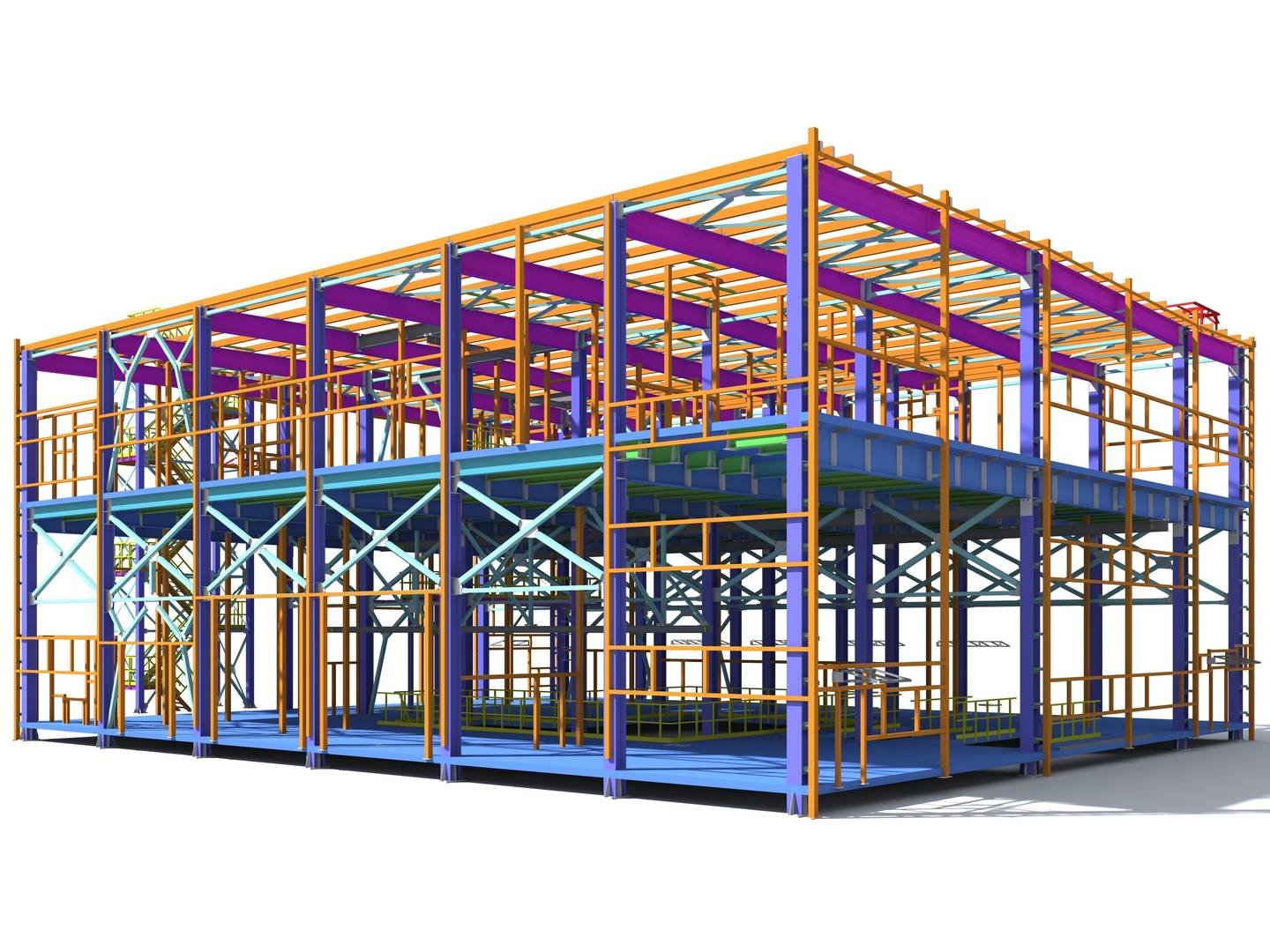
BIM in construction industry has moved from buzzword to backbone. From small residentialBIM in Construction Industry: The Ultimate Guide to 10 Essential Uses builds to billion-dollar infrastructure projects, Building Information Modeling is now the foundation of modern construction. This guide covers everything — definition, uses, management, trends, and the future of BIM.
Definition of BIM in Construction Industry
Building Information Modeling (BIM) is an intelligent, data-rich digital process that creates and manages a shared 3D model of a building or infrastructure project throughout its entire lifecycle — from design and construction through operation and demolition.
Unlike traditional 2D CAD drawings, BIM is not just a visual representation. It is a living database that contains detailed information about every component of a building: geometry, materials, specifications, costs, schedules, and performance data — all embedded within a single coordinated model.
The most widely adopted international standard for BIM is ISO 19650, which defines how construction information should be managed and exchanged across project teams. BIM is now mandatory for public sector projects in the United Kingdom, several European Union countries, and parts of the Middle East including Saudi Arabia and the UAE.
Why BIM In Construction Industry Is So Important
The construction industry has historically struggled with low productivity, high waste, and costly rework. BIM directly addresses these challenges by replacing fragmented, document-based workflows with a connected, data-driven approach.
Here is why BIM is critical for the construction industry today:
- Reduces errors and rework: A coordinated BIM model detects clashes between disciplines (structural, architectural, MEP) before construction begins, eliminating expensive on-site conflicts.
- Saves time and money: Studies consistently show BIM-enabled projects reduce construction costs by 10–20% and shorten delivery schedules by 7–15%.
- Improves collaboration: All stakeholders — architects, engineers, contractors, and clients — work from a single shared model, eliminating miscommunication between disconnected drawings.
- Enhances decision-making: Owners and project managers can simulate design options, run cost estimates, and analyze performance data before any physical work begins.Supports sustainability goals: BIM enables energy performance analysis and lifecycle carbon assessment during the design phase, helping teams meet green building standards like LEED and BREEAM.
- Facilitates facility management: The as-built BIM model becomes an operational asset — a digital twin — that building owners use to manage maintenance and operations for the life of the building.
- Enables regulatory compliance: BIM models can be submitted directly for digital planning and building regulation approvals in an increasing number of jurisdictions.
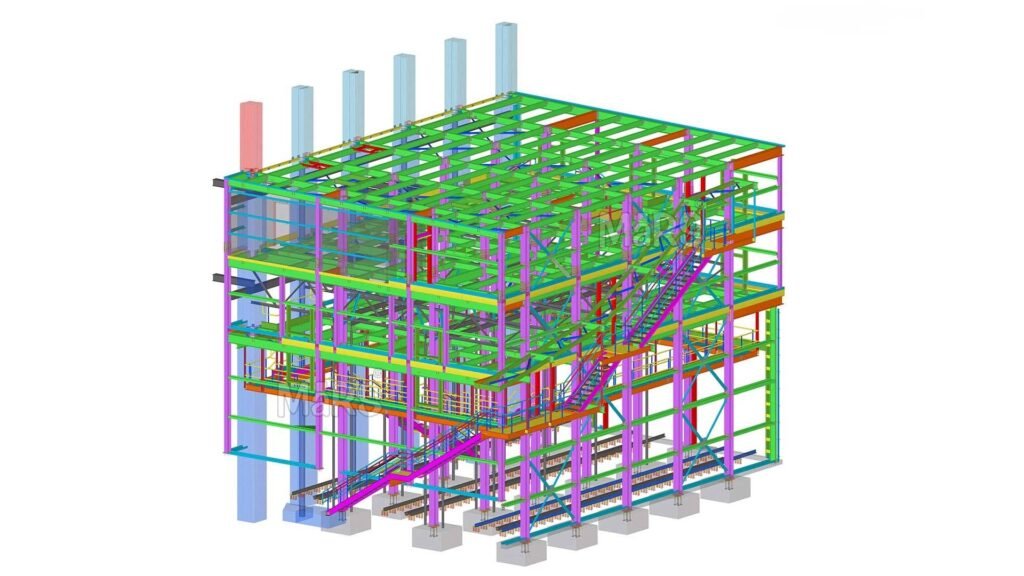
At AMC Engineering, our BIM Modeling services cover architectural, structural, and MEP models built to the highest international standards — giving your project a precise digital foundation from day one.
How Is BIM Used in the Construction Industry?
BIM is applied across every phase of a construction project, by every discipline involved:
Architects use BIM to develop and iterate design options in 3D, visualize spatial relationships, and produce coordinated construction documentation directly from the model.
Structural engineers use BIM to model frame systems, run structural analysis, and coordinate steel or concrete details with the architectural and MEP models.
MEP engineers (Mechanical, Electrical, Plumbing) use BIM to route ductwork, pipework, and cable trays through the building — detecting clashes with structure and architecture before installation.
Quantity surveyors and cost managers extract Bills of Quantities and cost estimates directly from BIM model data, dramatically reducing manual takeoff time and improving accuracy.
Construction managers and contractors use BIM for construction sequencing (4D BIM), logistics planning, site safety coordination, and progress tracking against the programme.
Facility managers use the handed-over BIM model to manage maintenance schedules, track asset data, and plan future renovations.
How Is BIM Changing the Construction Industry?
BIM is fundamentally transforming how the construction industry operates — shifting it from a reactive, paper-based industry to a proactive, data-driven one.
From 2D to intelligent 3D: Design and documentation is no longer produced as flat drawings. BIM models contain parametric objects — change a wall thickness in one place, and every affected drawing, schedule, and quantity updates automatically.
From siloed teams to integrated workflows: BIM breaks down the traditional barriers between architects, engineers, and contractors. Federated models — where each discipline’s model is combined and coordinated — create a culture of shared responsibility for project outcomes.
From reactive problem-solving to proactive risk management: Clash detection in BIM identifies design conflicts months before they reach site, when fixing them costs a fraction of the on-site alternative.
From drawings to data: Every BIM object carries embedded data — material specifications, manufacturer details, installation instructions, maintenance requirements. This data follows the asset through its entire lifecycle.
From physical to digital twins: Advanced BIM deployments create real-time Digital Twins — live models connected to IoT sensors in the building — that allow operators to monitor and optimize building performance continuously.
The Future of BIM in Construction Industry
The future of BIM is defined by deeper integration with emerging technologies that amplify its power far beyond 3D coordination:
Artificial Intelligence (AI) and Machine Learning are being integrated with BIM to automate design optimization, predict project risks, and generate clash-free MEP layouts automatically — tasks that previously required weeks of manual coordination.
Digital Twins will become standard deliverables for large infrastructure and building projects. A digital twin is a live, connected version of the BIM model that receives real-time data from the physical building, enabling predictive maintenance and performance optimization.
Generative Design uses AI algorithms within BIM environments to explore thousands of design options simultaneously, optimizing for cost, energy performance, structural efficiency, and constructability — then presenting the best solutions to the design team.
Augmented Reality (AR) and Virtual Reality (VR) allow project teams and clients to walk through BIM models immersively before a single brick is laid, identifying design issues and making informed decisions faster.
BIM Mandates Expanding Globally: More governments are making BIM mandatory for public projects. Saudi Arabia’s Vision 2030 infrastructure program, UAE’s construction regulatory frameworks, and Egypt’s growing adoption of international construction standards are all accelerating BIM adoption across the Middle East and North Africa.
Current Trends in BIM
The most significant BIM trends shaping the construction industry in 2026 include:
- OpenBIM and IFC standards: Increasing adoption of open, vendor-neutral data formats (IFC, BCF) that allow BIM data to flow seamlessly between different software platforms without translation loss.
- BIM Level 3 (iBIM): Moving beyond federated models toward a truly integrated, single shared BIM environment where all disciplines work simultaneously in one live model.
- Scan-to-BIM: Using laser scanning and photogrammetry to create precise BIM models of existing buildings for renovation, refurbishment, and heritage projects — a rapidly growing service area.
- 4D and 5D BIM: Attaching construction schedules (4D) and cost data (5D) to BIM models to create dynamic, visual project management tools that update in real time.
- Sustainable BIM: Embedding carbon tracking, energy analysis, and circular economy data directly into BIM workflows to meet increasingly stringent ESG and net-zero requirements.
- Mobile BIM: Site teams accessing live BIM models on tablets and mobile devices, enabling real-time quality inspections, RFI responses, and progress documentation directly on site.
Collaboration and Cloud-Based Solutions
One of the most transformative developments in BIM is the shift to cloud-based collaboration platforms. Traditional BIM workflows required large files to be transferred between offices on hard drives or FTP servers, causing version control problems and coordination delays.
Cloud BIM platforms — such as Autodesk Construction Cloud (ACC), BIM 360, Trimble Connect, and Bentley ProjectWise — solve this by hosting the BIM model and all project data in a shared, always-current environment accessible from anywhere in the world.
Key benefits of cloud-based BIM collaboration:
- All team members always work from the latest version of the model — no more “which drawing is current?” confusion
- Real-time clash detection and coordination reviews without needing to be in the same office
- Automatic audit trails of all model changes, RFIs, submittals, and approvals
- Seamless integration between design models, cost data, scheduling tools, and site management systems
- Reduced IT infrastructure costs — no local servers required
- Enables global project teams to collaborate across multiple time zones and geographies
The Common Data Environment (CDE) — the cloud platform where all project information is stored, shared, and managed — is now a requirement under ISO 19650 for BIM projects.
BIM Technology Applications in Construction
BIM technology encompasses a family of dimensions, each adding a layer of intelligence to the base 3D model:
| BIM Dimension | What It Adds | Application |
|---|---|---|
| 3D BIM | Three-dimensional geometry + object data | Design coordination, clash detection, visualization |
| 4D BIM | Time / construction schedule | Construction sequencing, programme simulation |
| 5D BIM | Cost / quantity data | Cost estimation, budget tracking, value engineering |
| 6D BIM | Sustainability / energy data | Carbon analysis, LEED/BREEAM compliance |
| 7D BIM | Facility management data | Asset management, maintenance scheduling |
| 8D BIM | Health & safety data | Site safety planning, risk assessment |
Beyond these dimensions, BIM technology is applied through a range of specialized processes:
- Clash Detection: Identifying spatial conflicts between structural, architectural, and MEP models before construction — the single highest-ROI application of BIM
- Shop Drawing Production: Generating accurate, coordinated fabrication and installation drawings directly from the BIM model
- Quantity Takeoff: Automated extraction of material quantities for cost estimating and procurement
- Point Cloud Integration: Processing laser scan data into accurate as-existing BIM models
- Construction Simulation: Animating the build sequence in 4D to optimize logistics and identify scheduling conflicts
What Is BIM Management?
BIM Management is the discipline of overseeing the creation, coordination, quality, and delivery of BIM information across a construction project. The BIM Manager — also called the BIM Coordinator or Information Manager — is responsible for ensuring that all project stakeholders produce, share, and use BIM data in a consistent, standardized way.
Core responsibilities of a BIM Manager include:
- Developing and implementing the BIM Execution Plan (BEP) — the master document that governs how BIM will be used on the project
- Setting up the Common Data Environment (CDE) and managing user access and workflows
- Defining BIM standards and protocols for model authoring, naming conventions, level of development (LOD), and file formats
- Coordinating federated model reviews — combining the architectural, structural, and MEP models and running clash detection
- Quality checking models for compliance with project standards before they are issued to other disciplines
- Managing the BIM information exchange at each project milestone and stage gate
- Training and supporting the project team on BIM tools and processes
- Delivering the as-built model and asset data to the client at project completion
A well-managed BIM process is the difference between a coordinated project that delivers on its promises and a chaotic one where the model becomes a liability rather than an asset.
What Is a BIM Execution Plan (BEP)?
A BIM Execution Plan (BEP) — also called a BIM Implementation Plan — is the foundational governance document for BIM on a construction project. It defines how, when, by whom, and to what standard BIM information will be produced and managed throughout the project lifecycle.
The BEP is typically developed by the lead appointed party (usually the main contractor or lead designer) and agreed upon by all project stakeholders before BIM work begins. It is a live document that is updated as the project progresses through each stage.
A comprehensive BEP includes:
- Project Information: Project name, type, location, contract type, and key dates
- BIM Goals and Uses: The specific BIM uses planned for the project (clash detection, 4D sequencing, quantity takeoff, etc.)
- Roles and Responsibilities: Who is responsible for producing, coordinating, and checking each model
- BIM Standards: The specific standards to be followed (ISO 19650, BS 1192, national standards, or client-specific protocols)
- Software and File Formats: The authoring tools to be used (Revit, ArchiCAD, Tekla, etc.) and the exchange formats (IFC, NWD, etc.)
- Level of Development (LOD) Matrix: Defining the required level of detail and information for each element at each project stage
- Common Data Environment Setup: How the CDE will be configured, organized, and managed
- Model Coordination Procedures: How clash detection will be conducted, how clashes will be logged and resolved, and how frequently coordination meetings will be held
- Information Delivery Milestones: The specific dates and formats for BIM deliverables at each project stage
The BEP is the most important document in BIM project management — it transforms BIM from a software tool into a managed, accountable process.
How BIM In Construction Industry Works
In practice, BIM on a construction project follows a clear sequence of activities that run in parallel with the traditional project stages:
Stage 1 — Briefing and Concept Design:
The client’s requirements are captured in an Employer’s Information Requirements (EIR) document, which defines what BIM information they need and when. The project team responds with a Pre-Contract BEP. Conceptual 3D massing models are created to explore design options.
Stage 2 — Developed Design:
Architectural, structural, and MEP designers each develop their discipline models in detail. The models are federated (combined) in a coordination platform and clash detection begins. The BIM Manager issues Clash Detection Reports and the design team resolves conflicts.
Stage 3 — Technical Design and Documentation:
Models are developed to construction documentation level. Coordinated shop drawings are extracted directly from the BIM model. Bills of Quantities are generated. The 4D construction programme is linked to the model.
Stage 4 — Construction:
The contractor uses the BIM model on site for setting out, quality inspection, and progress monitoring. RFIs are raised and resolved against the model. The model is continuously updated to reflect as-built conditions.
Stage 5 — Handover:
The final as-built model — containing all asset data, O&M information, warranties, and maintenance schedules — is handed over to the client as the primary operational document. This model becomes the foundation of the building’s Digital Twin.
BIM Technology in Detail
At its technical core, BIM operates through parametric object modeling — every element in the model (walls, columns, ductwork, light fittings) is an intelligent object with defined geometric and non-geometric properties.
Key technical components of BIM:
- Authoring Tools: Software platforms used to create BIM models — Autodesk Revit (the industry standard), ArchiCAD, Bentley AECOsim, and Tekla Structures for structural steelwork
- Coordination Platforms: Software for federating and clash-checking models — Autodesk Navisworks, Solibri, and BIM Collaborate Pro
- Common Data Environments: Cloud platforms for storing, sharing, and managing BIM data — Autodesk Construction Cloud, BIM 360, Trimble Connect
- IFC (Industry Foundation Classes): The open, vendor-neutral file format that allows BIM data to be exchanged between different software platforms without loss of information
- COBie (Construction Operations Building Information Exchange): A standardized data format for handing over asset and maintenance information from the BIM model to facility management systems
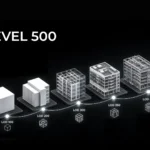
- Level of Development (LOD): A standardized framework (LOD 100 through LOD 500) that defines how much geometric detail and information is embedded in each BIM element at each project stage
- Point Cloud to BIM (Scan-to-BIM): The process of converting laser scan data from existing buildings into accurate BIM models using tools like Autodesk ReCap and Revit
- BIM + GIS Integration: Linking building-level BIM models with city-scale Geographic Information Systems (GIS) for urban planning, infrastructure management, and smart city applications
FAQ About BIM In Construction Industry
Q1: What does BIM stand for in construction?
BIM stands for Building Information Modeling. It is an intelligent digital process that creates a data-rich 3D model of a building or infrastructure project, containing all design, cost, schedule, and performance information in one shared environment.
Q2: Is BIM a software or a process?
BIM is primarily a process, not just software. While tools like Autodesk Revit, Navisworks, and ArchiCAD are used to create BIM models, BIM itself refers to the collaborative workflow and data management approach that connects all project stakeholders around a single source of truth.
Q3: Who uses BIM in a construction project?
BIM is used by every member of the project team — architects, structural engineers, MEP engineers, contractors, quantity surveyors, facility managers, and project owners. Each discipline contributes to and extracts information from the shared model throughout the project lifecycle.
Q4: What is clash detection in BIM?
Clash detection is the process of automatically identifying conflicts between different building elements — for example, a structural beam running through an HVAC duct — before construction begins. It prevents costly on-site rework and keeps the project on schedule.
Q5: What are the main benefits of BIM in construction?
The key benefits of BIM include:
- Reduced errors and on-site rework
- Lower construction costs (typically 10–20% savings)
- Faster project delivery
- Improved collaboration between all project disciplines
- More accurate cost estimates and quantity takeoffs
- Better sustainability and energy performance analysis
- Smoother facility management after handover
Q6: What is the difference between BIM and CAD?
Traditional CAD produces 2D drawings — flat lines on a page with no embedded data. BIM produces intelligent 3D models where every element (wall, pipe, beam) carries rich data including material specs, costs, maintenance schedules, and performance properties. BIM is a complete upgrade from CAD in terms of coordination and information management.
Q7: What is a BIM Execution Plan (BEP)?
A BIM Execution Plan (BEP) is the master governance document for BIM on a project. It defines who produces which models, what software is used, what level of detail is required at each stage, how clash detection is managed, and how the final model is handed over to the client.
Q8: What is LOD in BIM?
LOD (Level of Development) defines how much geometric detail and information is embedded in each BIM element at each project stage. It ranges from LOD 100 (conceptual massing) to LOD 500 (as-built, fully detailed with all operational data). The LOD required for each element at each stage is defined in the BEP.
Q9: Is BIM mandatory in construction?
BIM is already mandatory for public sector projects in the UK, several EU countries, Singapore, and parts of the Middle East including the UAE and Saudi Arabia. Adoption is growing rapidly across Egypt and the wider MENA region as part of large-scale infrastructure investment programs.
Q10: How does BIM improve sustainability in construction?
BIM enables energy performance simulation, daylight analysis, carbon footprint calculation, and material lifecycle assessment during the design phase — before any construction begins. This allows teams to optimize the building for sustainability targets like LEED and BREEAM without costly late-stage design changes.